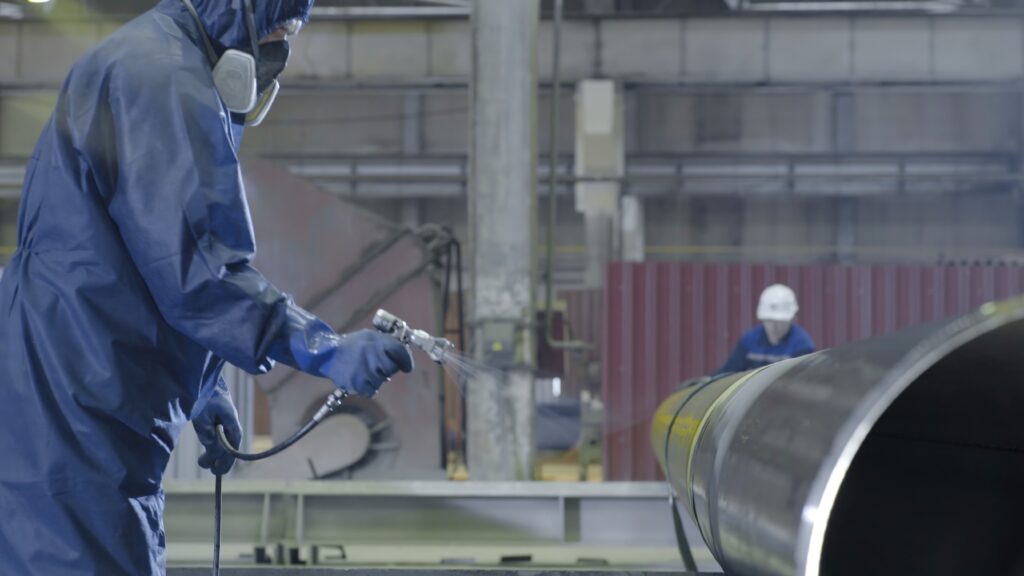
If you are responsible for plant reliability, engineering specifications, or facility maintenance, you already understand the pressure behind every coating decision. When coatings fail, the consequences ripple across operations: equipment downtime, unexpected maintenance costs, regulatory risks, and compromised product quality.
Your job is not simply to select a coating product. Your responsibility is to protect assets, maintain structural integrity, and ensure your facility continues operating safely under demanding conditions. That means choosing industrial coatings that can withstand aggressive chemicals, moisture exposure, abrasion, and extreme environments while maintaining long-term durability.
At Schmidt Industrial Services, we work with customers across multiple sectors of the industry who face these exact challenges. From chemical processing and manufacturing to food production and infrastructure, our industrial coatings solutions are engineered to protect critical assets while helping operations maintain long-term performance, compliance, and reliability.
Below are some of the most important industrial coatings applications where the right system directly supports operational success.
Table of Contents
- Tank Linings for Chemical Storage and Process Vessels
- Secondary Containment and Chemical Protection Systems
- Structural Steel Corrosion Protection
- Industrial Flooring Systems on Concrete Substrates
- Food-Grade Tank Linings and Sanitary Coatings
- Abrasion-Resistant Coatings for High-Wear Equipment
- Marine and Salt Water Corrosion Protection
- Pipe Linings and Infrastructure Rehabilitation
- Powder Coatings for Equipment Protection
- Choosing the Right Industrial Coatings Partner
Tank Linings for Chemical Storage and Process Vessels
Few environments place more stress on coatings than chemical storage tank systems and process vessels. These structures must contain aggressive chemicals, resist corrosion, and maintain long-term containment integrity.
Without proper tank linings, exposure to acids, solvents, and other industrial chemicals can quickly compromise steel, leading to corrosion, contamination risks, and costly shutdowns.
High-performance tank linings are engineered to protect internal surfaces while preserving structural integrity under demanding service conditions. Depending on the type of process environment, coatings must withstand continuous immersion, vapor exposure, thermal cycling, and aggressive chemical attack.
At Schmidt, our industrial coatings service focuses on selecting and applying the right linings for each tank application. This includes evaluating operating conditions, chemical exposure profiles, and substrate characteristics to ensure the system delivers long-term durability and containment integrity.
For many customers, the goal is simple: prevent failure before it begins and extend the service life of valuable assets. If your operation relies on storage infrastructure, you may also find value in our resource “Everything You Need to Know About Water Storage Tanks,” which explores tank materials, design considerations, and long-term maintenance strategies.
Secondary Containment and Chemical Protection Systems
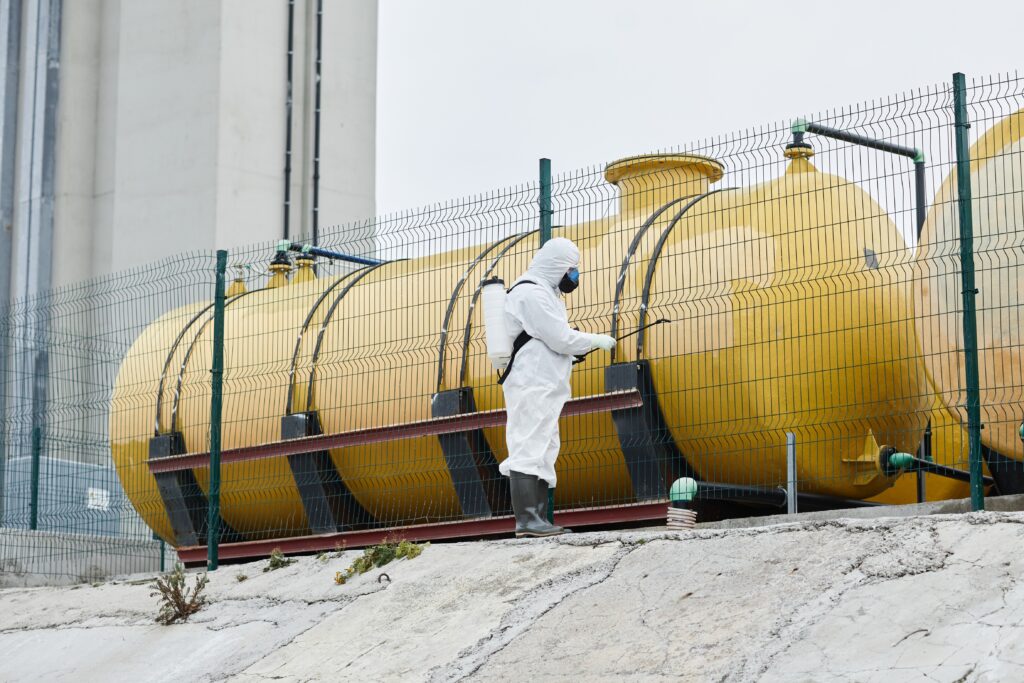
Facilities handling hazardous materials cannot rely solely on structural barriers. Secondary containment systems are essential for preventing environmental releases and maintaining compliance with safety regulations.
Containment areas must resist exposure to multiple chemicals, including solvents, acids, and industrial cleaning agents. The wrong coating system can degrade quickly, creating weak points that lead to containment failures.
Specialized industrial coatings solutions are designed to protect containment surfaces from chemical exposure while maintaining flexibility and adhesion under mechanical stress. These systems often incorporate reinforced linings that create seamless barriers capable of resisting aggressive materials.
Schmidt’s team works with facility managers, engineers, and specifiers to design containment systems that can resist chemical attack while maintaining safety and regulatory compliance.
Structural Steel Corrosion Protection
Across heavy manufacturing and infrastructure environments, steel structures are constantly exposed to moisture, industrial chemicals, and airborne contaminants.
Over time, corrosion begins to affect structural components, weakening connections and compromising long-term integrity. Without protective coatings, corrosion can lead to extensive repairs and operational disruptions.
Protective industrial coatings provide a critical barrier between the environment and structural materials. These coatings are engineered to prevent corrosion, extend equipment longevity, and maintain the reliability of industrial infrastructure.
Schmidt’s expertise in structural coating systems helps customers protect steel assets operating in demanding environments across the USA and beyond. By combining proven coating systems with precise application methods, we help facilities maintain operational success while minimizing lifecycle costs.
If corrosion risk is a concern in your facility, our guide “How Industrial Coatings Prevent Corrosion” explains the science behind coating systems and why they are one of the most effective ways to extend equipment lifespan.
Industrial Flooring Systems on Concrete Substrates
Industrial floors often face some of the most punishing conditions in a facility. Heavy equipment traffic, chemical spills, moisture infiltration, and impact loads can rapidly degrade untreated concrete substrates.
Protective coatings designed for concrete substrates help create durable flooring systems that resist chemicals, abrasion, and mechanical stress. These systems are frequently installed in manufacturing plants, warehouses, and processing environments where cleanability and operational performance are critical.
High-performance flooring coatings can also include electrostatic-dissipative finishes, anti-slip textures, and waterproofing layers to ensure safety and operational efficiency.
Schmidt’s flooring solutions combine advanced coating technologies with surface preparation techniques that create smooth, long-lasting surfaces capable of withstanding heavy industrial use.
Food-Grade Tank Linings and Sanitary Coatings
Food and beverage production environments require coatings that do more than resist corrosion. These facilities must also maintain strict hygiene standards and protect product quality.
Specialized food-safe tank linings are designed for ingredient storage and processing systems, including tanks used for chocolate, syrups, oils, and other materials. These linings must resist cleaning chemicals, prevent contamination, and maintain a smooth, sanitary surface that supports cleaning processes.
By selecting the right coating system, facilities can ensure consistent product quality while maintaining compliance with regulatory requirements.
Schmidt’s industrial coatings service includes sanitary linings engineered for food production environments where both durability and cleanliness are critical. For facilities operating in food production environments, our article “4 Things You Need to Know About Food Grade Stainless Steel” explains how material selection directly impacts sanitation, compliance, and long-term equipment performance.
Abrasion-Resistant Coatings for High-Wear Equipment
In many industrial environments, coatings must withstand not only chemical exposure but also significant mechanical wear. Equipment handling bulk materials, slurry systems, and transport lines often experience continuous abrasion.
In these environments, coatings must deliver exceptional abrasion resistance while maintaining adhesion and structural protection.
Specialized coating systems can protect surfaces exposed to abrasive materials while preserving the integrity of equipment surfaces. These coatings are engineered to maintain performance even under high-impact and high-friction conditions.
Schmidt works closely with customers to evaluate wear conditions and select coating solutions that deliver the required level of protection.
Marine and Salt Water Corrosion Protection
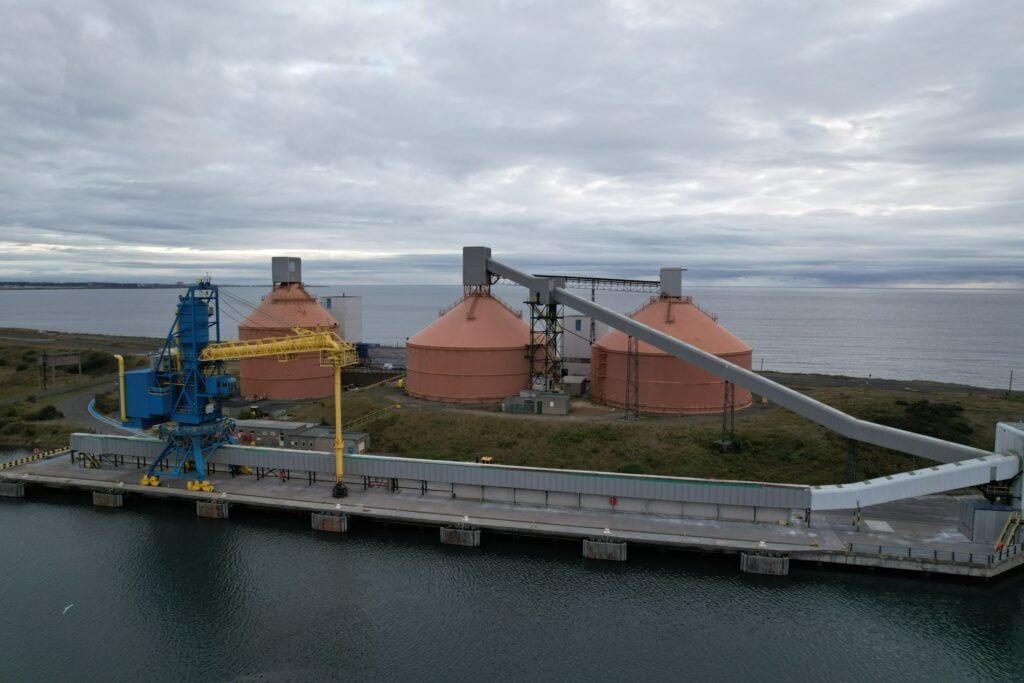
Structures exposed to saltwater face some of the most aggressive corrosion environments in the industrial market.
Saltwater exposure accelerates corrosion through chloride attack, constant moisture, and environmental stress. Protective industrial coatings are essential for preserving structural materials in these environments.
High-performance coating systems can significantly extend the lifespan of marine infrastructure while reducing maintenance frequency and lifecycle costs. For customers operating facilities along coastlines or in marine environments, these coatings create an essential barrier that helps maintain operational reliability.
Pipe Linings and Infrastructure Rehabilitation
Many facilities operate piping systems that transport corrosive fluids or chemical mixtures. Over time, internal corrosion can degrade piping systems, threatening operational continuity.
Advanced linings provide a cost-effective way to rehabilitate existing piping without replacing entire systems. These coatings create protective barriers that resist corrosion and chemical attack while restoring operational integrity.
Schmidt’s coating service includes pipe-lining technologies that help customers restore infrastructure quickly and extend the lifespan of systems. When legacy equipment components are no longer available from original manufacturers, reverse engineering can also extend asset life. Our article, “4 Benefits of Reverse Engineering Equipment for Different Industries,” explains how facilities address these challenges while maintaining operational continuity.
Choosing the Right Industrial Coatings Partner
While liquid-applied coatings dominate heavy industrial environments, powder coatings also play an important role in equipment protection.
These coatings provide durable finishes that resist corrosion and wear while offering environmental advantages during application. Powder coatings are commonly used for fabricated components, equipment housings, and structural elements where a consistent finish and long-term durability are required.
When applied properly, powder coating systems provide a reliable protective layer that supports long-term performance.
Industrial Coatings for Heat Exchangers and Process Equipment
In many industrial facilities, heat exchangers and process equipment operate in environments where heat, pressure, and chemical exposure are constant. These conditions place extreme stress on metal surfaces, and without protective coatings, corrosion and scaling can quickly reduce equipment performance.
Protective industrial coatings are often applied to heat exchangers, reactors, and other process equipment to protect surfaces from chemical attack while maintaining efficient heat transfer. These coatings help prevent corrosion buildup that can affect operational efficiency, increase energy consumption, and shorten equipment lifespan.
For facilities operating continuously, maintaining the integrity of process equipment is critical. When coatings begin to degrade, internal corrosion can spread rapidly, leading to costly shutdowns or equipment replacement.
If you suspect declining heat-transfer efficiency or corrosion in process equipment, our article “7 Signs Your Heat Exchanger Needs Repair” outlines early warning signs engineers should watch for before small issues turn into major operational failures.
Choosing the Right Industrial Coatings Partner
The right industrial coatings solutions do more than protect surfaces. They support operational reliability, extend equipment life, and help facilities maintain safe, compliant operations. But coatings alone do not deliver results. Success depends on experience, preparation, and execution.
That’s where Schmidt’s leadership, innovations, and industry expertise make the difference.
Our dedicated team provides technical support, helping customers evaluate their environments, select the correct coating systems, and ensure they are properly applied and cured. From new installations to emergency repairs, we assist businesses worldwide in protecting their critical infrastructure.
Our commitment is simple: deliver coating systems that protect your equipment, preserve your operations, and support long-term success.
If you’re ready to learn more about Schmidt’s industrial coatings service, contact our team today to explore the latest coating technologies designed to protect your most important assets.