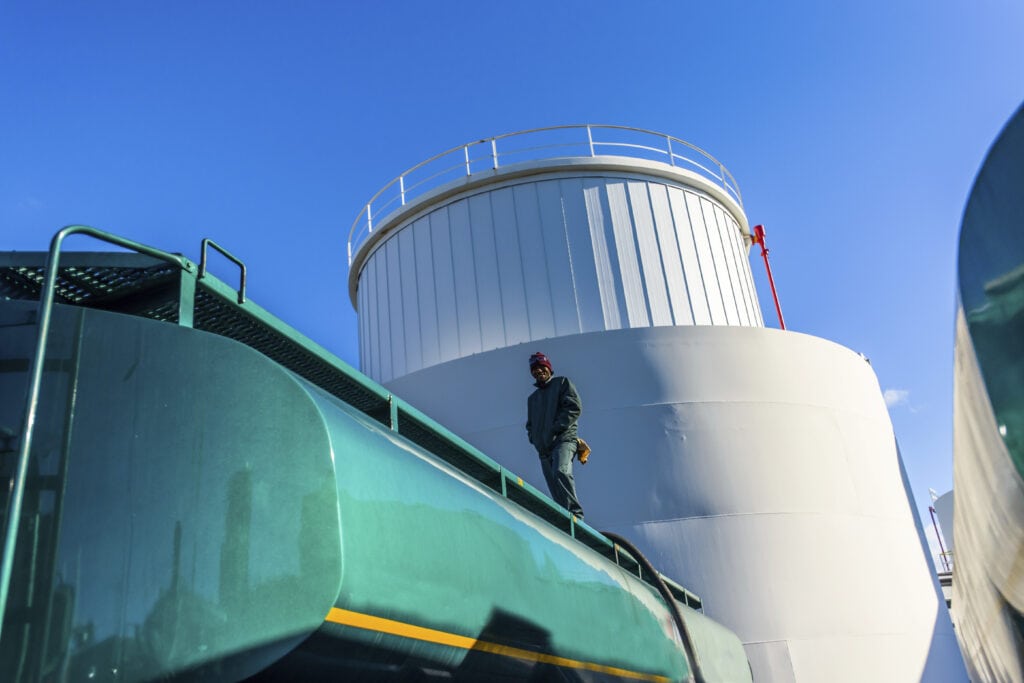
Industrial tanks are exposed to some of the harshest operating conditions, such as chemicals, pressure, moisture, and constant use. The problem is that when coatings fail, it’s almost always expensive. Coating failure can result in corrosion, leaks, contamination, or unplanned shutdowns that can cost up to $1.7 million per hour.
In this article, we’ll explain how industrial tank coatings work, the benefits they provide, common causes of coating failure, and how proper inspection and maintenance prevent premature tank damage. You learn how tank coatings fail, how failure progresses, and how proper coatings extend tank life and prevent leaks.
The Real Role of Industrial Tank Coatings: Asset Protection, Not Surface Treatment
Most facilities don’t fail because tanks suddenly collapse; they fail because protective systems quietly degrade over time.
At the center of that risk is the coating system.
Industrial tank coatings are not simply applied finishes. They are engineered protection systems designed to preserve the structural integrity of storage tanks, protect against corrosion, and isolate the tank substrate from aggressive chemicals, moisture, and thermal stress.
In high-demand industrial environments (from oil and chemical processing to power generation), these coatings act as the first line of defense. When they perform, tanks operate reliably. When they fail, degradation accelerates beneath the surface, often unnoticed until operational issues appear.
Corrosion alone costs industries an estimated $2.5 trillion annually worldwide, much of it driven by failures in protective systems like coatings. The distinction is critical: coatings are not maintenance tasks; they are risk management systems.
We break down how corrosion develops and spreads in industrial systems in “How Industrial Coatings Prevent Corrosion,” including why even small coating failures can lead to major structural damage if left unaddressed.
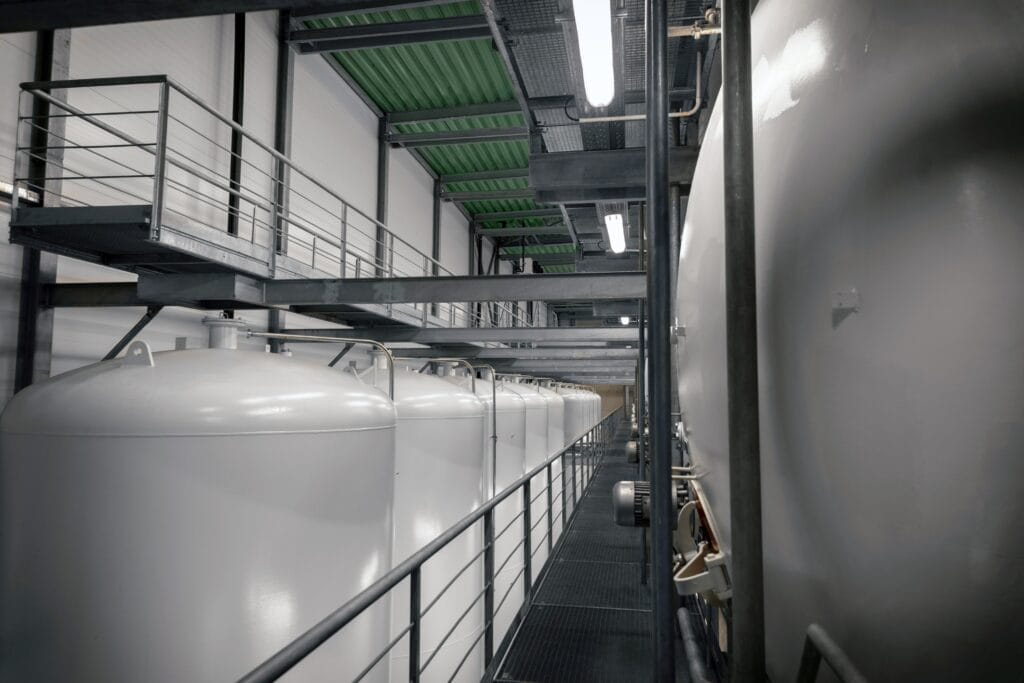
Tank Lining as a Critical Barrier Against Chemical and Mechanical Stress
Inside the tank, the stakes are even higher.
A properly engineered tank lining system protects internal surfaces from direct contact with stored materials. These linings must withstand continuous exposure to chemicals, including acids, solvents, and other aggressive substances, often at elevated temperatures.
This is where material selection becomes crucial. Systems such as epoxy, vinyl ester, and urethane coatings are selected based on chemical compatibility, temperature tolerance, and required abrasion and permeation resistance.
A mismatch between the coating type and operating conditions is one of the most common causes of premature failure. Even high-performance materials will degrade if they are not suited to the environment. Because material selection plays a critical role in long-term performance, we created the guide “Everything You Need to Know About Water Storage Tanks,” including how lining decisions impact durability, maintenance, and failure risk.
And for facilities evaluating material options, Schmidt compares performance tradeoffs in “Carbon Steel vs Stainless Steel: Which Tank Material Is Best for Your Plant?” to help guide long-term decisions.
How Storage Tank Failures Actually Develop
Most storage tank failures follow a predictable pattern, but one that is often misunderstood.
Failure rarely begins with visible damage. It starts at the interface between the coating and the substrate. Poor substrate condition, inadequate cleaning, or incorrect installation can create weak adhesion points that allow moisture and contaminants to penetrate.
From there, a combination of chemical attack, thermal cycling, and mechanical stress introduces micro-defects, such as small cracks, blistering, or coating breakdown. These defects allow corrosion to spread beneath the coating layer, often hidden from view.
By the time visible signs appear, such as leaks, delamination, or surface failure, the underlying structure may already be compromised. This is what makes tank failure particularly costly: it is not the initial defect, but the delayed detection.
The True Cost of Coating Failure: Beyond Repairs
When coating systems fail, the impact extends far beyond the tank itself.
Facilities may face product loss, environmental exposure, safety risks, and operational downtime. In systems handling hazardous or sensitive materials, even minor leaks can cause contamination and regulatory issues, especially when secondary containment is compromised.
Operationally, coating failure disrupts operations, delays production, and increases maintenance demands. What begins as a localized issue can quickly escalate into one of the most costly repairs a facility will encounter.
This is why the coating strategy should never be reactive. It must be built around lifecycle management and long-term performance. When failures reach this stage, facilities often need to rebuild or recreate components quickly. In “Reverse Engineering vs Buying New from an OEM,” we explore where lead time, cost, and customization become critical factors.
Extending Service Life Through Strategic Coating Systems
The primary value of industrial coatings is not short-term protection; it is extending the service life of critical assets.
When properly engineered, coatings protect steel and concrete substrates from corrosion, chemical degradation, and mechanical wear. This preservation allows facilities to extend the operational life of storage tanks, delay capital-intensive replacement, and maintain consistent performance.
For facilities managing aging tanks, this becomes a strategic advantage. Instead of defaulting to full replacement, coating systems provide a cost-effective pathway to restore and maintain existing infrastructure.
In this context, coatings are not an expense; they are an investment in longevity.
The True Cost of Coating Failure: Beyond Repairs
When coating systems fail, the impact extends far beyond the tank itself. While repairs are often the most visible cost, they are rarely the most significant.
In most industrial facilities, the real financial impact comes from secondary effects: product loss, environmental exposure, safety risks, and operational downtime. These costs often compound quickly, turning what begins as a localized coating issue into a much larger operational problem.
Product Loss and Contamination Risks
In storage and processing environments, even small leaks can result in measurable product loss. In industries handling chemicals, fuel, or sensitive materials, that loss extends beyond volume. It includes wasted batches, cleanup, and disposal.
In regulated environments such as food or chemical processing, contamination events can trigger product recalls, compliance investigations, and potential fines. These costs can escalate rapidly, often exceeding the cost of the original coating failure or repair.
Environmental Exposure and Regulatory Costs
When coatings fail and secondary containment systems are compromised, facilities face immediate environmental risk. Spills or leaks may require reporting, remediation, and in some cases, long-term monitoring.
Environmental cleanup costs can range from tens of thousands to millions of dollars, depending on the severity of the incident and the materials involved. In addition to direct costs, facilities may face regulatory penalties and increased scrutiny moving forward.
Safety Risks and Structural Concerns
Coating degradation also introduces safety risks. As corrosion progresses, it can weaken the tank structure, reduce structural integrity, and increase the likelihood of failure under pressure or load.
These conditions can create hazardous working environments, increasing the risk of incidents, OSHA violations, and liability exposure. In many cases, coating failure is an early indicator of deeper structural concerns that require immediate attention.
Operational Downtime and Production Loss
Operationally, downtime is often the most immediate and disruptive cost. When coating failure leads to leaks or structural issues, systems may need to be shut down for inspection and repairs.
In high-demand industrial environments, unplanned downtime can cost anywhere from $5,000 to over $100,000 per hour, depending on the process. These interruptions impact production schedules, delay output, and create downstream supply chain disruptions.
Why a Reactive Approach Becomes Expensive
When viewed together, these factors make one thing clear: coating failure is not just a maintenance issue…it is a multi-layered operational risk.
Facilities that rely on reactive repairs often end up managing repeated failures, increasing costs over time. In contrast, a proactive strategy (focused on inspection, maintenance, and early intervention) helps control risk, reduce long-term cost, and maintain operational stability.
Maintenance and Regular Inspections as a Risk Mitigation Strategy
Even the best coating systems require ongoing maintenance.
The difference between long-term performance and premature failure often comes down to regular inspections and proactive planning. Inspections allow facilities to identify early-stage degradation (localized wear, minor coating breakdown, or surface damage) before these issues evolve into larger failures.
By performing timely repairs, facilities can address issues at an early stage, preserving coating performance and avoiding widespread damage. This approach not only protects the tank but also supports minimal disruption to operations by aligning repairs with planned maintenance windows. In high-demand environments, maintenance is not reactive; it is a structured risk mitigation strategy.
Industrial Coatings as Part of a Complete Protection System
Industrial tanks do not operate in isolation.
They exist within larger protective systems that include secondary containment, structural supports, and surrounding concrete or steel infrastructure. These systems must work together to prevent leaks, contain failures, and maintain operational safety.
A breakdown in one area, whether a coating, containment system, or structural component, can compromise the entire environment.
This is why leading providers take a systems-based approach. At Schmidt Industrial Services, through our Engineered Resin Solutions (ERS) division, we integrate industrial coatings, tank lining, and repair capabilities to address both surface-level protection and underlying structural issues.
ERS specializes in corrosion control, leak mitigation, and engineered coating solutions designed for long-term performance in demanding industrial conditions.
Need Help Evaluating Your Tank Coating System?
If your facility is experiencing coating breakdown or corrosion, or is managing aging tanks, the right solution is not always replacement. Schmidt Industrial Services provides industrial coatings, tank lining systems, and repair solutions designed to extend asset life, restore performance, and reduce operational risk.
Contact Schmidt today to evaluate your tank coating system and prevent costly failures before they happen.