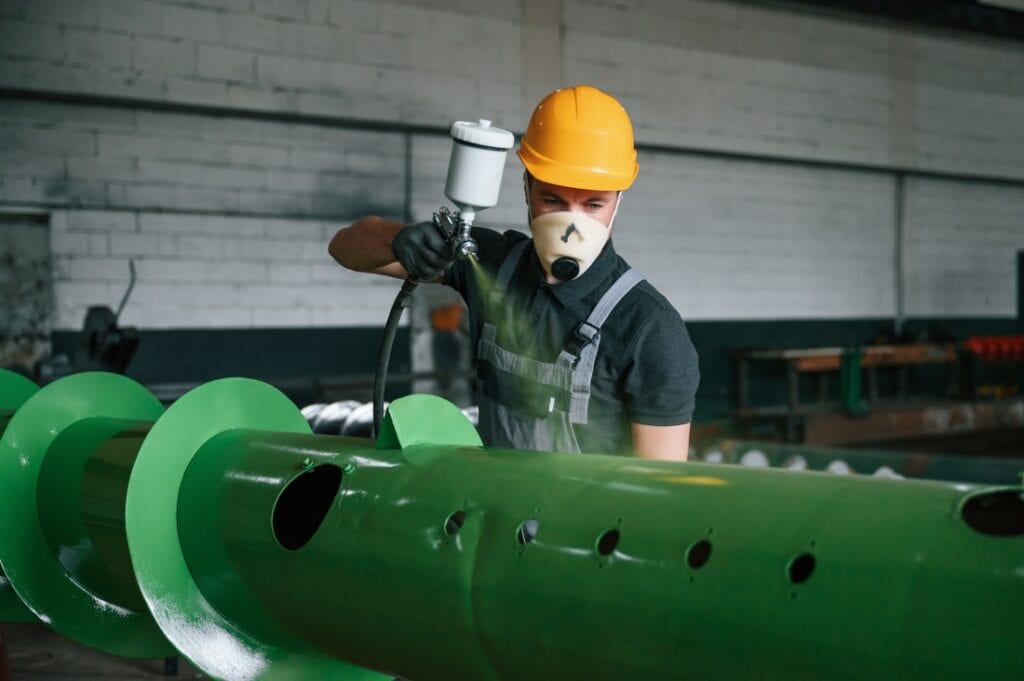
Industrial coatings are rarely noticed when they’re doing their job… but when they fail, the consequences are immediate and expensive.
This ultimate guide breaks down how industrial coatings protect assets in demanding environments, reduce corrosion risk, and support compliance while extending service life. From tank linings to process floors, coating strategy directly affects uptime, safety, and total cost.
Whether you’re evaluating a new build or trying to prevent repeat coating failures, this guide provides the technical clarity needed to protect your equipment (and your operation) long term.
What You’ll Learn:
- How industrial coatings prevent corrosion at the chemical and material level
- The relationship between coating systems and EPA, OSHA, and environmental compliance
- How improper surface prep and installation cause premature coating failure
- Differences between epoxy, polyurethane, polyurea, and specialty lining systems
- How to evaluate lifecycle cost instead of focusing on upfront material pricing
- Warning signs that indicate coating breakdown before structural damage occurs
- How proper inspection, maintenance, and documentation extend asset longevity
By the end, you’ll understand how to approach industrial coatings as a strategic investment, not a maintenance afterthought.
Table of Contents
- Industrial Coatings Are Not Paint. They’re Asset Protection Systems
- Where Coating Performance Matters Most
- How Coating Failure Actually Happens (And Why It Starts Early)
- The True Cost of Coating Failure: Beyond Repairs
- When Coating Failure Becomes a Replacement Problem
- Choosing the Right Industrial Coatings
- Advanced Coating Technologies and When They Matter
- Why Surface Preparation Determines Coating Performance
- Why Top Facilities Choose Engineered Resin Solutions (ERS)
Industrial Coatings Are Not Paint. They’re Asset Protection Systems
In most facilities, industrial coatings are still treated like a finishing step.
Something applied at the end of a project to “protect” a surface. In reality, coatings sit much closer to the center of operations. They determine how long assets last, how often systems fail, and how much unplanned work a facility has to absorb over time.
In environments where steel, concrete, and critical components are constantly exposed to chemicals, abrasion, moisture, and heat, coatings become the first and most important line of defense. Whether it is storage tanks, process piping, floors, or containment areas, the right coating system protects against corrosion, controls degradation, and preserves structural integrity. The wrong system does the opposite. It creates a false sense of protection while failure develops underneath.
The difference is not cosmetic; it’s operational. Facilities that treat coatings as engineered systems extend asset life, reduce maintenance cycles, and stabilize production. On the other hand, facilities that treat coatings as a one-time application inherit recurring failure.
Industrial coatings don’t exist in isolation. They’re part of a broader system that includes fabrication, material selection, and equipment design.
What Industrial Coatings Actually Do in Harsh Environments
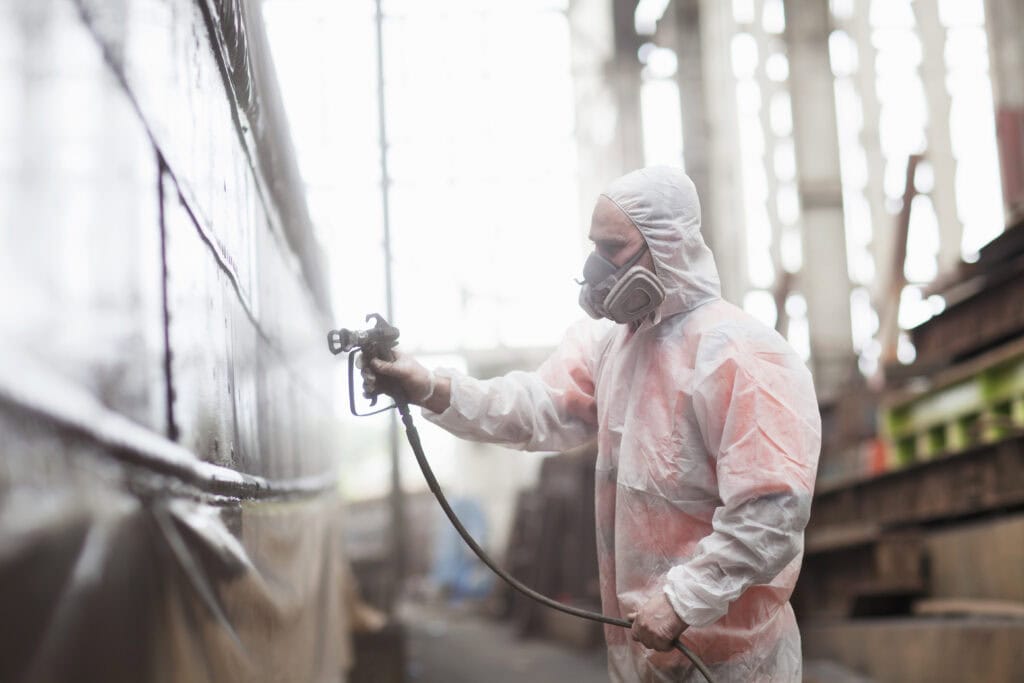
At a technical level, coatings are designed to create a protective barrier between a steel surface or concrete substrate and its surrounding environment. But in practice, that barrier must handle far more than simple exposure. It must resist chemical attack, withstand abrasion, tolerate extreme heat, and maintain adhesion across changing environmental conditions.
This is why different types of coatings exist. For example, epoxy coatings provide strong adhesion and chemical resistance. Polyurethane coatings deliver UV stability and surface durability. Then you have zinc-rich coating systems, which offer sacrificial corrosion protection using zinc particles and zinc dust. Each system is built for a specific function within a larger protection strategy.
When selecting coating systems, it’s equally important to understand the underlying cause of degradation. In “What Causes Corrosion and How to Fix It,” we explain the chemical and environmental mechanisms that drive corrosion, and how coatings are designed to interrupt that process.
Where Coating Performance Matters Most
Coating performance becomes most important in places where failure does not stay isolated to the surface.
In real industrial service, coatings do far more than preserve appearance. They isolate substrates from their environment, slow electrochemical reactions that drive corrosion, and withstand mechanical wear, chemical exposure, and operating stress. That is why coating selection in critical service areas is not a final decision. It is an asset protection decision.
The highest-risk environments usually share one trait: the substrate is under continuous or repeated attack from multiple directions at once.
This means a surface may be exposed to standing moisture and sunlight, chemical splash and abrasion, or immersion service and temperature cycling. The Association for Materials Protection and Performance (AMPP) notes that coating selection should account for:
- the service environment
- physical conditions such as temperature and flow
- chemical conditions
- and the condition of the prepared substrate.
Below are a few common equipment use cases where coatings are critical.
Storage Tanks And Process Vessels
Tanks and process vessels sit near the top of the risk hierarchy because they combine corrosion exposure with containment responsibility. In these systems, coatings and linings are often the barrier between aggressive contents and structural steel or concrete. If the system is poorly selected or begins to break down, the result is not just visible deterioration.
It can become product loss, contamination, or a broader integrity issue that spreads beneath the lining before operators see obvious warning signs. That is why coating performance in tanks has to be judged by long-term resistance to chemical exposure, immersion service, and adhesion under real operating conditions, not just initial appearance.
Tank coatings are only one part of the equation. Material selection and tank design play a critical role in how well coatings perform over time. In “Carbon Steel vs Stainless Steel: Which Tank Material Is Best for Your Plant?” we explore how substrate choice affects corrosion risk, coating compatibility, and long-term performance.
Concrete Floors, Containment, And Wastewater Structures
Concrete is often underestimated because it appears substantial, but in industrial settings, it presents its own coating challenges. Wastewater structures, containment areas, and coated floors can be exposed to wet-dry cycling, chemical splash, abrasion, and substrate movement, all of which can undermine bond strength and long-term performance.
AMPP specifically notes that concrete coating selection depends on service wetness, physical conditions, chemical conditions, and the condition of the prepared substrate, which is why failures in these areas are often tied to both exposure severity and preparation quality. In practical terms, coating performance matters most on concrete wherever leaks, process fluids, or traffic can turn surface breakdown into a safety, sanitation, or containment problem.
Structural Steel, Piping, And Exposed Infrastructure
Structural steel and exposed piping demand a different kind of coating performance because they are often battling atmospheric corrosion in plain sight. Sunlight, moisture, condensation, weather cycling, and surface damage all contribute to shortening coating life, especially when systems are exposed outdoors or in corrosive industrial environments.
AMPP describes coatings as the first line of defense for structural steel, and surface preparation standards exist precisely because exposed steel fails quickly when adhesion and system design are not right from the start. In these applications, coating performance matters most where assets are expected to stay in service for years under continuous environmental exposure with minimal tolerance for shutdowns or structural loss.
How Coating Failure Actually Happens (And Why It Starts Early)
Coating failure rarely starts where you can see it. It begins as a small breakdown at the surface or substrate interface, then develops quietly under normal operating conditions until it reaches a visible tipping point. By the time blistering, cracking, or rust appears, the coating system has already lost its ability to protect the asset. Understanding how these failures develop is what allows facilities to prevent them before they become operational problems.
Inadequate Surface Preparation
Surface preparation is the most common point of failure in any coating system, and it often determines performance before the coating is even applied.
What It Looks Like
Early-stage delamination, peeling at edges or welds, and coating that lifts cleanly from the surface. In many cases, rust bleed or contamination appears beneath an otherwise intact coating.
What Causes It
Contaminants such as oil, dust, moisture, or residual corrosion left on the surface prevent proper adhesion. Inadequate blasting or an incorrect surface profile also limits the coating’s ability to mechanically bond to the substrate.
What Would Have Prevented It
Proper surface preparation standards, including abrasive blasting to the correct profile, complete removal of contaminants, and inspection before coating application. This is the step where most failures are either prevented or guaranteed.
Incorrect Coating Type for the Environment
Even properly applied coatings will fail if the system is not designed for the actual conditions it will be exposed to.
What It Looks Like
Chalking, discoloration, softening, blistering, or premature breakdown of the coating film. In UV-exposed areas, coatings may fade or become brittle. In chemical environments, coatings may swell or lose integrity.
What Causes It
The coating system does not match the actual exposure conditions. For example, using an epoxy coating without a UV-stable topcoat, or applying a system without sufficient chemical resistance in aggressive environments.
What Would Have Prevented It
Selecting coatings based on real operating conditions, including exposure to chemicals, moisture, UV, and temperature. A properly designed system, such as combining epoxy base layers with polyurethane coatings, ensures long-term durability.
Moisture and Chemical Ingress at the Interface
Once a coating system is compromised, the primary mechanism of failure becomes the movement of moisture and chemicals beneath the surface.
What It Looks Like
Blistering, bubbling, or localized coating failure that spreads outward over time. In advanced stages, rust or corrosion becomes visible beneath the coating.
What Causes It
Small defects, such as pinholes, thin-film areas, or microcracks, allow moisture and chemicals to penetrate the coating. Once this happens, corrosion begins at the substrate level and spreads underneath the coating layer.
What Would Have Prevented It
Ensuring proper film thickness, consistent application, and the use of coating systems designed to act as a continuous barrier. Routine inspections to catch early-stage defects before they expand are also critical.
Mechanical Damage and Progressive Wear
In active industrial environments, coatings are constantly exposed to physical stress that gradually degrades their protective function over time.
What It Looks Like
Worn-down coating in high-traffic areas, exposed substrate, scratches, gouges, or areas where the coating has been physically removed. Over time, these areas expand into larger zones of failure.
What Causes It
Continuous abrasion, impact, or operational wear from equipment, foot traffic, or material flow. Standard coatings without sufficient abrasion resistance break down quickly in these environments.
What Would Have Prevented It
Specifying coatings designed for mechanical stress, such as high-build systems or reinforced coatings, and identifying high-wear areas during the design phase. Regular maintenance to repair localized damage before it spreads also extends system life.
The True Cost of Coating Failure: Beyond Repairs
When a coating system fails, the cost is rarely limited to the repair itself. In most industrial facilities, the visible repair represents only a fraction of the total financial impact. The real cost shows up in unplanned downtime, lost production, compliance exposure, and long-term asset degradation.
This isn’t theoretical. According to a global study by NACE International, the total cost of just corrosion exceeds $2.5 trillion annually, or roughly 3.4% of global GDP. And that’s not taking into account a handful of other ways surfaces can fail, such as UV degradation or moisture damage.
These costs are critical because unplanned downtime alone can exceed the cost of the entire coating project. In high-output industries, even a short interruption can disrupt production schedules, delay shipments, and reduce overall efficiency. Beyond downtime, coating failure introduces compounding risks. Leaks, contamination, and structural degradation can trigger safety incidents and regulatory consequences.
The takeaway is clear: coating systems are not a maintenance expense. They are a financial control mechanism.
Facilities that treat them as such consistently reduce total lifecycle cost, while those that don’t often absorb the full impact of failure across operations, safety, and capital investment.
Downtime and Production Loss Multiply Fast
When coatings fail in active systems, facilities are often forced into reactive shutdowns. Unlike planned maintenance, these events are unstructured. Crews are pulled from other priorities, production lines are halted mid-cycle, and operations teams are left managing both the repair and its downstream impact.
What makes this costly is not just the stoppage itself, but the ripple effect across the facility. Delayed batches, missed delivery windows, rescheduled labor, and idle equipment all contribute to lost productivity. In continuous operations, even localized coating failures on piping, tanks, or containment systems can shut down entire process lines.
The most effective way to reduce this risk is to treat coatings as part of uptime planning. Facilities that perform routine inspections, identify early-stage degradation, and schedule repairs during planned outages are able to control disruption. Instead of reacting to failure, they manage it. That shift alone can significantly reduce production loss and stabilize operations.
Contamination, Safety, and Compliance Risks
In regulated environments, coating failure is not just a maintenance issue. It is a direct risk to product quality, safety, and regulatory compliance.
The cost implications are significant. Food recalls alone can cost companies millions per incident, with estimates ranging from $10 million to over $100 million depending on scope and brand impact.
To manage this risk, your coating strategy must be aligned with compliance requirements from the outset. This includes selecting systems engineered for the specific exposure environment, maintaining coating integrity through structured inspection programs, and addressing early-stage damage before it compromises containment or product contact surfaces.
In food and sensitive production environments, coating failure can directly impact product quality and safety. In “The Ultimate Guide to Food Processing Equipment: Types, Materials, and Industries,” we explore how equipment design, materials, and coatings work together to maintain compliance and product integrity.
When Coating Failure Becomes a Replacement Problem
Coating failure rarely stays at the surface.
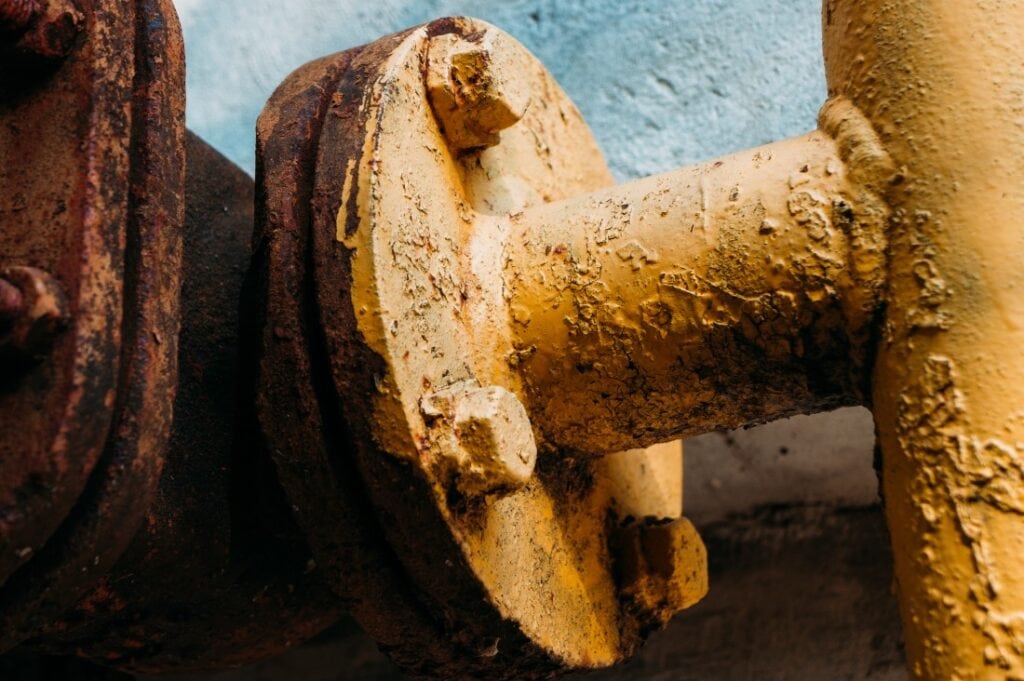
Once the protective barrier is compromised, the underlying substrate begins to degrade. In steel systems, this means corrosion that reduces thickness and structural capacity. In concrete, it can mean cracking, chemical attack, and loss of surface integrity.
If this progression is not addressed early, the scope of work expands quickly. What could have been a localized repair becomes a larger rehabilitation project involving structural repair, relining, or component replacement. In more advanced cases, facilities are forced to replace tanks, piping systems, or containment structures.
The most effective way to avoid this outcome is early intervention. Facilities that monitor coating condition, track degradation patterns, and respond before substrate damage occurs can significantly extend asset life. This is where integrated capabilities become important. When coating issues intersect with structural damage, combining coatings, repair, and fabrication into a single solution prevents escalation and reduces total project cost.
Choosing the Right Industrial Coatings
By the time most facilities evaluate coatings, the focus is already too narrow. Teams often ask, “Which coating should we use?” when the better question is, “What coating system is required for this environment?” The difference matters because performance is never determined by a single product. It is determined by how multiple layers work together under real operating conditions.
A properly designed coating system considers substrates, exposure type, mechanical wear, temperature variation, and chemical contact. It also considers how the system will age over time. In the following section, we introduce the core coating technologies used in industrial environments and explain how each contributes to overall system performance when combined.
Epoxy Coatings for Adhesion and Chemical Resistance
Epoxy coatings form the backbone of many industrial coating systems. Known for strong adhesion and excellent chemical resistance, epoxy systems bond tightly to both steel and concrete, creating a durable protective layer. Their epoxy binder chemistry allows them to resist a wide range of industrial chemicals, making them ideal for tanks, floors, and containment systems.
However, epoxy is not without limitations…
Many epoxy systems degrade under UV radiation, which is why they are often used as a base or intermediate layer rather than a final topcoat in outdoor environments. In practice, epoxy should be viewed as a structural layer in the system, not a complete solution on its own.
Polyurethane Coatings for Durability and UV Stability
Polyurethane coatings are commonly used as topcoats due to their superior resistance to sunlight, weathering, and surface wear. Aliphatic polyurethanes provide excellent UV stability and long-term appearance retention, while aromatic polyurethanes are better suited for interior or protected applications.
In high-traffic or exposed environments, polyurethane systems provide critical abrasion resistance, helping surfaces maintain performance under continuous use. When paired correctly with epoxy base layers, they complete the system by protecting it from environmental degradation and mechanical wear.
Zinc Rich Coating Systems for Corrosion Protection
A zinc-rich coating system provides active corrosion protection through sacrificial action. By incorporating high concentrations of zinc particles or zinc dust, these coatings protect steel by corroding in place of the underlying substrate.
Zinc-rich primers are typically used as the first layer in systems protecting structural steel, piping, and exposed metal components. Organic zinc-rich coatings offer flexibility and ease of application, making them suitable for a wide range of industrial environments. These systems are especially valuable where corrosion risk is high and long-term durability is required.
How to Select the Right Coating System for Your Environment
Selecting the right coating system requires more than familiarity with the product. It requires a structured evaluation of how the surface will perform under real operating conditions. Without that, even well-known systems can fail prematurely.
Before specifying a coating system, facilities should work through a consistent evaluation process:
- What substrate are you coating? Steel, concrete, or composite surfaces require different systems and preparation methods
- What is the exposure type? Chemical immersion, splash zone, atmospheric exposure, or mechanical wear all demand different coating properties
- What chemicals or materials are involved? Identify exposure to acids, solvents, oils, or corrosive agents
- What are the environmental conditions? Consider UV exposure, moisture, temperature swings, and indoor vs outdoor placement
- What level of abrasion or traffic is expected? Floors and high-contact areas require added abrasion resistance
- What is the expected service life? Short-term fixes and long-term systems require different approaches
- Can this be maintained easily? Consider how the system will be inspected and repaired over time
By asking these questions, you can shift coating selection from guesswork to strategy. It’ll ensure the system is designed for how the asset actually operates, not how it looks on a specification sheet.
Why System Design Matters More Than Product Choice
Even high-performance coatings will fail if they are used in the wrong system. A zinc-rich primer without proper topcoats, or an epoxy system exposed directly to UV without protection, will degrade regardless of product quality.
The goal is not to choose the “best coating.” The goal is to design the right system for the environment, the substrate, and the operational demands of the facility.
Facilities that approach coating selection this way reduce failure rates, extend asset life, and avoid the cycle of repeated repairs. Those who do not often find themselves re-coating the same assets again and again, without solving the underlying problem.
Advanced Coating Technologies and When They Matter
Not all environments can be protected with standard coating systems.
In facilities that experience extreme chemical exposure, high temperatures, or continuous abrasion, advanced coating technologies are necessary. These systems are engineered for conditions where conventional epoxy coatings or standard polyurethane coatings will degrade too quickly or fail to provide sufficient long-term protection.
At this level, coating selection becomes less about product familiarity and more about engineering judgment. In this section, we break down the advanced coating technologies used in these high-demand environments, when they’re required, and how to select the right system based on real operating conditions.
If you want to learn more, our article “How Industrial Coatings Prevent Corrosion in Chemical Plants” breaks down how specialized coating systems are designed for extreme chemical exposure and high-risk environments.
Metalized Coatings and Thermal Spray Systems
Metalized coatings use thermal spray processes to apply molten metal onto a prepared surface, forming a highly durable protective layer. These systems provide exceptional long-term corrosion resistance, particularly in environments where moisture, oxygen, and exposure cycles continuously attack exposed metal.
They are most commonly used in marine infrastructure, coastal facilities, bridges, structural steel, and outdoor industrial assets where long service life is required with minimal maintenance. In these applications, traditional paint systems may require frequent reapplication, while metalized coatings can significantly extend protection timelines.
Metalized systems are also valuable in areas where shutdowns are difficult or costly. For example, structural steel in power generation facilities or exposed infrastructure in wastewater plants often benefits from the extended durability these systems provide. When combined with sealing topcoats, metalized coatings offer both barrier protection and long-term performance in harsh environments.
Polysiloxane and High-Performance Topcoat Systems
Polysiloxane coatings are considered one of the most advanced topcoat technologies available in industrial applications. They combine the chemical durability of epoxy systems with the UV stability of polyurethane topcoat systems, making them ideal for environments where both internal and external exposure must be managed.
These coatings are frequently used in infrastructure, refineries, and outdoor processing facilities where surfaces are exposed to sunlight, moisture, and fluctuating temperatures. Their ability to maintain gloss, color, and film integrity over time makes them especially valuable in applications where long maintenance cycles are required.
In addition to environmental resistance, polysiloxane systems also provide strong abrasion resistance, making them suitable for areas with moderate mechanical wear. Facilities often use these coatings on tanks, piping, and structural components where long-term durability and reduced maintenance frequency are priorities.
Alkyd and Acrylic Coatings in Less Aggressive Environments
While advanced systems dominate high-risk environments, alkyd coatings and acrylic coatings still play an important role in less demanding applications. These coatings are typically used in controlled environments where exposure to chemicals, moisture, and mechanical wear is limited.
Common use cases include interior structural steel, equipment housings, light-duty surfaces, and areas where appearance and basic protection are sufficient. These systems are often selected for their ease of application, lower cost, and faster turnaround times, particularly in non-critical areas of a facility.
However, their limitations must be clearly understood.
In environments with prolonged exposure to moisture, chemicals, or abrasion, these coatings will degrade faster than high-performance systems. Facilities that misapply these coatings in aggressive conditions often face premature failure and increased maintenance cycles. Knowing where these systems fit (and where they do not) is essential to building a reliable coating strategy.
Where Advanced Systems Are Required in Real Facilities
Advanced coating technologies are not niche solutions. They are required in many standard industrial scenarios where exposure conditions exceed the limits of conventional systems.
Facilities should strongly consider advanced systems in situations such as:
- Tanks and containment systems exposed to aggressive chemicals or continuous immersion
- Structural steel in marine or high-moisture environments
- Process areas exposed to extreme heat or rapid temperature cycling
- Floors and surfaces subject to continuous abrasion or heavy traffic
- Outdoor assets requiring long-term UV and weather resistance
In these environments, the cost of coating failure is significantly higher than the cost of specifying a more advanced system upfront. This is where coating strategy becomes a long-term operational decision, not just a material selection exercise.
Why Surface Preparation Determines Coating Performance
No coating system can outperform the surface it is applied to.
Surface preparation is not just a preliminary step. It is the foundation of coating performance and the single most important factor in determining whether a system will succeed or fail over time.
At a technical level, coatings rely on adhesion to create a continuous barrier between the substrate and its environment. That bond must withstand thermal expansion, mechanical stress, moisture intrusion, and chemical exposure. This means that if the surface is not properly prepared, the bond is compromised from the start.
Even the most advanced epoxy coatings, polyurethane coatings, or zinc-rich coating systems will begin to fail prematurely if they cannot properly anchor to the substrate. Over time, poor adhesion leads to blistering, delamination, and corrosion beneath the coating layer. The worst part? By the time these issues are visible, the failure is already well underway.
Facilities that treat preparation as a critical part of the coating system, rather than a separate step, consistently see longer service life, fewer repairs, and more predictable performance. In contrast, cutting corners during preparation almost always leads to recurring maintenance cycles and higher long-term costs.
Preparing Steel Surfaces for Maximum Adhesion
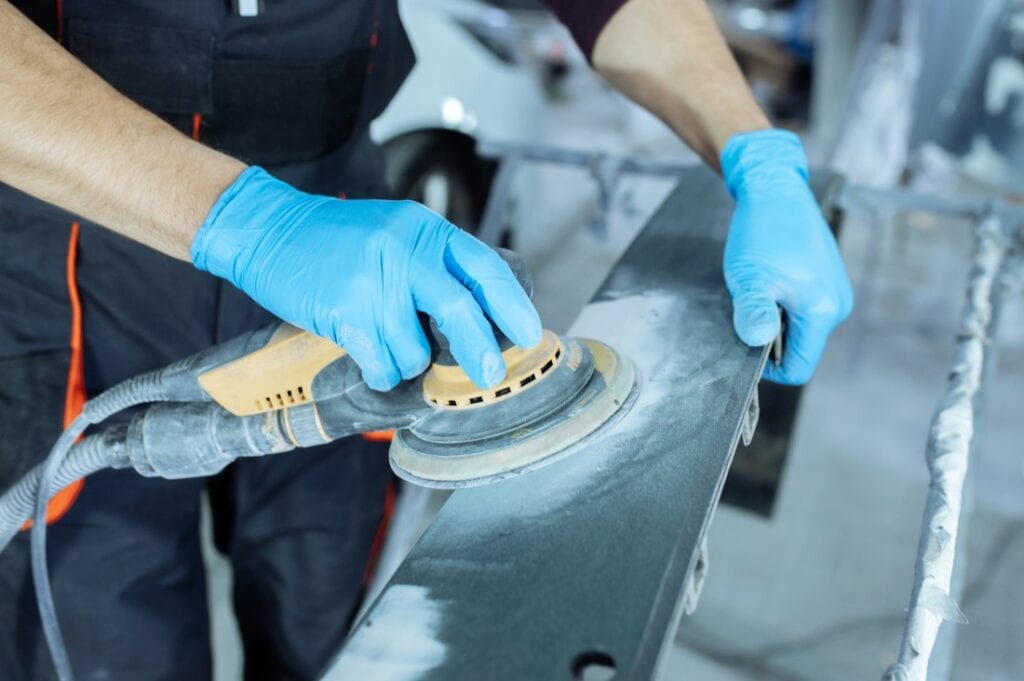
A properly prepared steel surface must be free of contaminants, rust, mill scale, and any previous coating residue that could interfere with adhesion. To do this, abrasive blasting is the most common method used. It creates a uniform surface profile that allows coatings to mechanically bond to the substrate.
Another thing to note is that preparing steel surfaces is somewhat of a balancing act. Too smooth, and the coating cannot anchor effectively. Too rough, and it may create inconsistencies in film thickness or premature wear. Achieving the correct profile is critical to ensuring that zinc-rich primers, epoxy layers, and topcoats perform as intended.
This all matters so much because in many industrial environments, steel is already exposed to corrosion, oils, or process contaminants. If these things are not fully removed during preparation, they become failure points within the coating system. Proper cleaning, blasting standards, and inspection before application are essential. The quality of preparation directly determines how well the coating resists long-term exposure.
Concrete Preparation and Substrate Challenges
Coating concrete introduces a different set of challenges…
Unlike steel, concrete is porous, variable, and highly sensitive to moisture. These characteristics make surface preparation more complex and often more critical to long-term coating performance.
Moisture is one of the most common causes of coating failure on concrete. If moisture is trapped within the substrate, it can create vapor pressure beneath the coating, leading to blistering and delamination. This is especially common in floors, containment areas, and wastewater environments where surfaces are frequently exposed to liquids.
In addition to moisture, surface defects such as cracks, voids, and weak or deteriorated areas must be addressed before coating. These defects compromise the integrity of the coating system and create pathways for chemical intrusion. Proper preparation may involve mechanical profiling, crack repair, resurfacing, or the use of specialized primers designed to stabilize the substrate.
Facilities that overlook these factors often experience premature coating breakdown, even when using high-performance systems. In contrast, those that properly evaluate and prepare concrete substrates create a stable foundation that supports long-term durability.
Environmental Conditions During Application
Coating performance is not determined solely by material and surface preparation.
The conditions during application play a critical role in how the coating cures and performs over time. Temperature, humidity, and ambient conditions all influence how a coating system behaves during installation.
Most coatings are designed to be applied within specific temperature and humidity ranges. Applying coatings outside of these parameters can affect curing, adhesion, and film formation. For example, high humidity can introduce moisture into the coating layer, while low temperatures can slow or prevent proper curing.
These environmental factors are especially important in large industrial facilities where conditions may vary across different areas of a site. Indoor environments, outdoor structures, and enclosed systems all present unique challenges. Managing these variables requires planning, monitoring, and, in some cases, environmental control measures during application.
Experienced coating teams understand that successful application extends beyond the material itself. It requires controlling the full environment in which the coating is applied. When done correctly, this ensures that the coating system performs as designed from day one and continues to deliver protection over its full service life.
Why Top Facilities Choose Engineered Resin Solutions (ERS)
Most coating failures are not just coating problems; they’re symptoms of deeper issues. Substrate degradation, structural wear, chemical exposure, and operational stress all play a role in how and why coatings break down over time.
Engineered Resin Solutions (ERS) was built specifically to address these types of challenges. As part of Schmidt Industrial Services, ERS delivers industrial coating solutions that go beyond surface protection. Our work is supported by integrated fabrication, machining, and repair capabilities, allowing facilities to solve both the visible coating issue and the underlying cause in a single coordinated approach.
This matters in real operations. When multiple vendors are involved, coating work, structural repair, and equipment restoration often become disconnected. That leads to delays, misalignment, and recurring failure. With ERS, coating projects are treated as part of a larger system, ensuring that the solution holds up not just on the surface, but over time.
How ERS Prevents Escalation Before It Becomes Replacement
At a New England power plant, repeated wet and dry cycles caused severe coating degradation across piping and skid systems. The result was peeling, blistering, and active corrosion in areas that were difficult to access and repair.
Rather than disassembling the system or replacing components, ERS applied a targeted solution using high-solids epoxy systems and proprietary coatings, such as ERS 80RS Rust Stopper. The repair addressed both surface degradation and underlying corrosion without removing the equipment.
The outcome was operationally significant. The facility avoided disassembly, reduced downtime through fast cure times, and extended the useful life of the system. This is the difference between reactive replacement and an engineered coating strategy. One responds to failure. The other prevents escalation.
Read More of This Case Study Here
Coatings Protect More Than Surfaces
Industrial coatings don’t just protect metal, concrete, or equipment surfaces. They protect uptime, compliance, and long-term capital investment.
Facilities that understand this treat coatings as a strategic decision rather than a maintenance task. They invest in the right systems, apply them correctly, and maintain them over time. In return, they gain stability, predictability, and control over their operations.
Facilities that do not make this shift will continue to experience the same expensive cycle. Apply, degrade, repair…repeat. The difference is not the coating, but how the coating is understood.
If your facility is dealing with corrosion, coating failure, or aging infrastructure, the right solution is rarely just a new coating. Schmidt Industrial Services and Engineered Resin Solutions deliver industrial coatings, repair, and integrated asset protection strategies designed to extend service life and reduce operational risk.
Contact Schmidt Industrial Services to evaluate your next project and implement a coating strategy that actually performs.