
When one unavailable part threatens your entire operation, what’s the plan?
Most manufacturing facilities don’t experience catastrophic collapse; they stall when a single critical component fails, and a process can’t run without it.
Maybe the OEM discontinued the part years ago.
Maybe the source code, drawings, or data structures were lost.
Maybe lead times are 32+ weeks, and production can’t wait.
Or maybe the only engineer who knew how it was built retired 15 years ago.
In industrial or manufacturing settings, that single bottleneck can trigger equipment failures, emergency shutdowns, and massive maintenance costs.
When equipment fails, and there’s no backup plan, reverse engineering becomes the most strategic option for reducing downtime, cutting costs, and restoring equipment reliability.
This guide was built for maintenance managers, reliability engineers, and operations decision-makers seeking real-world benefits (not just theory) from reverse engineering in transforming repair and upgrade strategies.
By the end, you’ll know exactly why reverse engineering is becoming a go-to strategy for keeping facilities running smoothly, even when OEM options fall short.
Table of Contents
- What Reverse Engineering Is and Why It Matters
- Reverse Engineering Benefits by Industry
- Confectionery
- Chemical and Biotech
- Power
- Industrial Water
- Refinery
- FAQs
What Reverse Engineering Is and Why It Matters
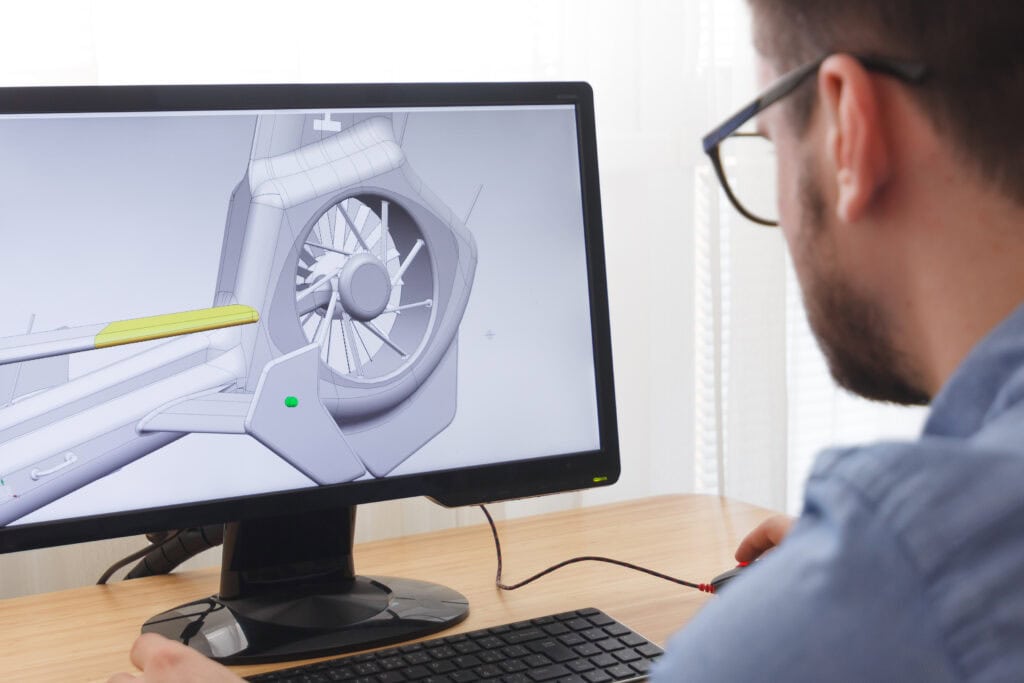
Reverse engineering is the process of analyzing and reconstructing existing machine parts, components, or systems to accurately reproduce them, often improving performance in the process.
It uses computer-aided design (CAD), CAM software, predictive analytics, digital measurement tools, and cutting-edge technology such as 3D scanning, vibration analysis, and thermal imaging to capture geometry, tolerances, and material properties.
It is not copying. It is diagnosing, digitizing, problem-solving, and rebuilding.
Reverse-engineered parts help:
- Restore equipment no longer supported by the OEM
- Extend the useful life of assets without complete replacement
- Reduce maintenance activities and emergency corrective maintenance
- Support preventive maintenance and predictive maintenance programs
- Maintain production continuity without redesigning the system
In many industries, reverse engineering is essential for tightening maintenance schedules, supporting regular maintenance, and achieving significant cost savings while staying aligned with legal requirements and safety standards.
Reverse Engineering Benefits by Industry
Confectionery
Sanitation cycles, sticky materials, and high-speed forming mean confectionery equipment is subject to wear, abrasion, and geometric sensitivity. More specifically, downtime during holiday or retail windows can cost millions.
4 Benefits of Reverse Engineering for Confectionery
- Restores obsolete sanitary components quickly: Keeps food production running without redesigning entire equipment assemblies or waiting months for OEM replacements.
- Improves hygiene and cleanability: Reverse-engineered geometries reduce harborage points and improve surface finish, shortening cleaning windows and supporting plant maintenance and food safety audits.
- Reduces product loss and inconsistency: Maintains critical shaping-tool accuracy so portioning, forming, and uniformity remain stable, protecting revenue and brand trust.
- Supports predictive maintenance: Digital models allow planned rebuilds rather than emergency shutdowns, reducing waste and raw material losses.
Read our blog How to Select the Right Chocolate Tank for Your Confectionery Plant
Chemical and Biotech
When a critical component is exposed to corrosive media or high-temperature alloys begin to fatigue, failure isn’t gradual…it’s abrupt and costly. And when replacement parts don’t exist because the OEM discontinued the equipment, lead times stretch beyond outage schedules, or the original drawings were lost decades ago, plants are left exposed to real operational risk.
4 Benefits of Reverse Engineering for Chemical & Biotech
- Extends the life of high-alloy components: Reverse engineering enables reproduction with upgraded materials or coatings, reducing corrosion and delivering significant cost savings compared to full system replacement.
- Supports planned turnarounds: Faster modeling and CNC machining mean parts return to service inside tight outage windows.
- Eliminates dependence on unavailable suppliers: Reverse engineering avoids pricing volatility and single-vendor risk.
- Maintains audit-ready documentation: Rebuilt components include traceable files for validation and inspections.
Power
Power plants rely on uptime because even a short, unplanned outage can ripple across the entire energy grid. When a turbine blade erodes faster than expected, a boiler tube cracks, or a critical heat exchanger component fails with no replacement available, the entire system can be forced offline. And unlike other industries, utilities can’t simply pause production and absorb the delay.
4 Benefits of Reverse Engineering for Power Generation
- Protects outage schedules and reduces downtime: Reverse-engineered turbine, boiler, and heat exchanger components keep scheduled outages on track and eliminate panic delays.
- Enables the replication of legacy equipment: Supports older equipment where drawings are missing, or models never existed, avoiding the need for a total replacement investment.
- Improves performance through wear-pattern analysis: Reverse engineering reveals root causes and enables design improvements.
- Restores balance and integrity under extreme load: Precision reconstruction supports vibration control, heat integrity, and equipment performance.
Dive deeper into materials comparison in our blog, Carbon Steel vs Stainless Steel: Which Tank Material Is Best for Your Plant?
Industrial Water
Pumps, valves, impellers, and corrosion-facing systems take the most brutal beating in fluid-handling environments, and when they start to degrade, failure comes fast. The problem is that many of these parts are custom, decades old, or no longer supported, leaving facilities with no easy path to replacement.
4 Benefits of Reverse Engineering for Industrial Water
- Recreates critical components without redesigning entire systems: Reverse engineering allows targeted replacement, avoiding major capital projects.
- Improves corrosion resistance and lifespan: High-performance alloys and advanced coatings reduce failures and maintenance frequency.
- Converts emergency downtime into planned maintenance: Supports predictive maintenance and prevents failures before they occur.
- Reduces energy consumption and operational costs: Smooth, accurate geometries = optimized flow efficiency and lower energy demand.
Refinery
High-temperature, high-pressure, and hazardous processing environments don’t allow second chances. The challenge is that many of the critical components operating under these conditions are specialized, custom-built, or decades old, and replacement availability is limited.
4 Benefits of Reverse Engineering for Refinery Operations
- Replaces critical internal components during turnaround windows: Reverse engineering enables fast, accurate replication even under extreme schedule pressure.
- Identifies weak points to improve design: Wear analysis enables strengthened geometry and upgraded metallurgy.
- Reduces risk of catastrophic failure: Avoid spills, workplace accidents, shutdown orders, and regulatory exposure.
- Cuts reliance on complex global supply chains: Local reverse engineering avoids long lead times and protects production continuity.
FAQs
What is reverse engineering, and why do manufacturing facilities rely on it?
Reverse engineering is the process of analyzing and rebuilding machine parts, components, or systems when original drawings, data structures, or documentation are unavailable. In industrial or manufacturing settings, it allows teams to reproduce critical parts that are no longer supported by an OEM, helping prevent equipment breakdowns, restore equipment reliability, and dramatically reduce downtime.
Manufacturers rely on reverse-engineered components because they offer significant cost savings compared to replacing entire machines and help extend the useful life of complex machinery without redesigning systems from scratch.
When is reverse engineering more cost-effective than replacement?
Reverse engineering is typically the best option when:
- A part is no longer supported by the OEM
- Lead times are too long, and stopping production isn’t possible
- A component is custom or requires specialty geometry
- Replacement costs exceed rebuild costs
- Maintenance costs continue rising due to repetitive failures
In these cases, reverse engineering provides low-cost, fast-turnaround alternatives that avoid operational delays and deliver cost savings across many industries.
How does reverse engineering reduce maintenance costs and support plant maintenance strategy?
Plant maintenance encompasses everything required to keep equipment operational and safe, from routine and preventive maintenance to shutdown and corrective maintenance.
Reverse engineering supports these programs by providing replacement parts quickly and cost-effectively, preventing failures before they disrupt production, and improving equipment performance. When integrated into maintenance schedules, reverse-engineered parts help cut costs associated with emergency repairs, long lead times, and lost production hours.
What role does CNC machining play in reverse engineering?
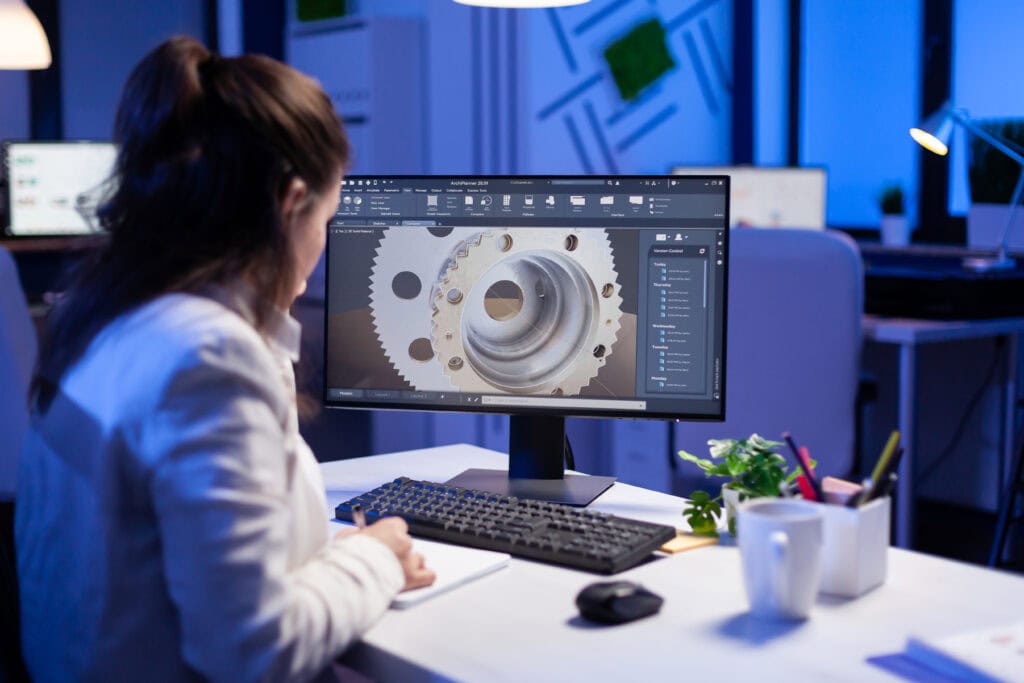
Reverse engineering often relies on CNC machining and computer numerical control (CNC) equipment to precisely manufacture replacement parts once the geometry is captured using tools such as vibration analysis, thermal imaging, and computer-aided design modeling.
Using CNC machine technology and CAM software, teams can rebuild components with tight tolerances that perform exactly like the original part, or better, improving accuracy, durability, and long-term efficiency in demanding manufacturing settings.
Can reverse engineering help improve preventive maintenance and predictive maintenance programs?
Absolutely. Reverse engineering works hand in hand with preventive maintenance, predictive maintenance, and predictive analytics by identifying root causes of wear and failure.
With accurate digital models, maintenance teams can forecast wear patterns, optimize maintenance activities, reduce emergency shutdowns, and schedule part replacements around production cycles, dramatically reducing downtime and costs while increasing productivity.
How does reverse engineering help with lost information and legacy equipment?
For older machinery and systems, it’s common for source code, drawings, or records to be missing. Reverse engineering recaptures that knowledge digitally and preserves it for the future.
This means that when equipment fails, facilities aren’t dependent on tribal knowledge or guesswork; they have complete, accurate digital documentation to support regular inspections, process control, and long-term safe operations.
Can reverse engineering help improve safety and reduce workplace accidents?
Yes. By identifying weak points, improving worn geometries, and detecting hidden defects before they escalate, reverse engineering helps prevent failures, eliminate unexpected breakdowns, and maintain equipment that protects workers from hazards. In industries where safety is non-negotiable, this is one of the key objectives of modern plant maintenance.
Final Thought
Reverse engineering delivers what reactive maintenance never can: control.
It drives reductions in downtime and costs, and improves equipment reliability, efficiency, and planning accuracy in manufacturing settings and beyond. Whether you are battling obsolete drawings, emergency failures, or scaling production, reverse engineering provides strategic leverage, not just repair.
When equipment fails, experience matters. And Schmidt, particularly our machine shop Wagner, has built that expertise through decades of hands-on experience, complex challenges, and proven results such as this case study.
If your operation needs reliability instead of hope, let’s rebuild it better.
Contact Schmidt for Reverse Engineering and Machining Expertise