When essential equipment fails, most operations default to the same solution: contact the original manufacturer and order a replacement part. On paper, that is the safest path: it matches the original design, meets documented specifications, and carries an official label.
In reality, that decision often comes with long lead times, escalating costs, limited customization, and growing uncertainty about long-term support. Many manufacturers now face six-to twelve-month delays, discontinued product lines, and pricing structures that reflect scarcity rather than value.
This is where reverse engineering becomes a serious operational alternative.
For facilities that depend on uptime, production continuity, and predictable maintenance budgets, the choice between OEM replacement and reverse engineering is not simply about price. It is about control, reliability, and long-term performance.
Understanding when to buy new and when to reverse-engineer requires technical judgment, manufacturing expertise, and a clear understanding of how modern CNC machining actually works. In this article, we’ll outline everything you need to know when faced with the age-old question, “Should I reverse engineer this part or buy new from an OEM?”
Table of Contents
- Understanding the OEM Replacement Model
- What Reverse Engineering Really Means in Modern Manufacturing
- CNC Machining as the Backbone of Reverse Engineering
- The Real Benefits of Reverse Engineering
- From Failure to Performance: How Schmidt Delivers Reverse Engineering That Lasts
- Choosing Control Over Dependency
Understanding the OEM Replacement Model
Original equipment manufacturers design parts to meet specific technical requirements at a particular moment in time. Those designs reflect the materials, tooling, and manufacturing methods available when the equipment was developed. Over time, production priorities shift, tooling is retired, supply chains change, and engineering teams move on.
What remains is a catalog listing and a procurement system that may no longer align with real-world operations.
On top of that, OEM replacement parts often come with extended lead times, especially for legacy machines. Production runs are frequently batched, meaning parts are manufactured only when enough demand accumulates. For specialized equipment, that delay can stretch into months.
Cost structures follow a similar pattern. As volume decreases, pricing increases, and facilities often pay for scarcity rather than for value. Even when the replacement arrives, it may reflect the same design limitations that caused the original failure.
In some industries, regulatory requirements or warranty constraints necessitate OEM sourcing. In many others, it simply reflects habit rather than strategy.

What Reverse Engineering Really Means in Modern Manufacturing
Reverse engineering is often misunderstood as copying a part and machining it again. In professional manufacturing environments, the reverse engineering process is far more sophisticated.
It begins with an engineering analysis of the failed or worn component. Machinists and engineers evaluate physical dimensions, material condition, wear patterns, surface finish degradation, and structural weaknesses. They study how the part interacts with surrounding equipment, how loads are transferred, and where fatigue develops.
This detailed analysis establishes the root cause rather than surface symptoms.
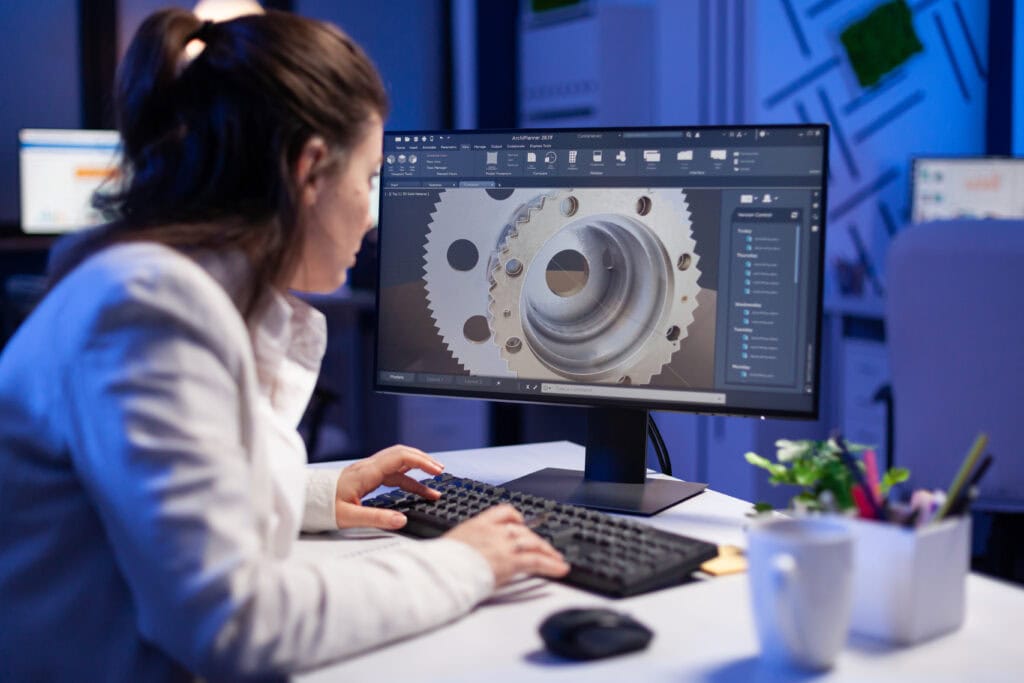
From there, measurements are captured using precision metrology tools and converted into a CAD file through computer-aided design systems. These digital models incorporate geometric dimensioning, tolerance zones, and position tolerance controls that define how the part will function in assembly.
Modern reverse engineering techniques focus on design intent. The goal is not to reproduce imperfections. The goal is to understand what the part was supposed to do and rebuild it to perform that function more reliably.
Material selection plays a major role in whether a reverse-engineered part succeeds in the long term. If you’re working in regulated or food-grade environments, our article 4 Things You Need to Know About Food Grade Stainless Steel breaks down how material choices directly affect safety, compliance, and equipment lifespan.
CNC Machining as the Backbone of Reverse Engineering
Reverse engineering succeeds or fails based on machining capability.
High-quality CNC machining allows manufacturers to control surface finish, dimensional accuracy, and structural integrity at levels that were not possible when many legacy components were originally produced.
Modern CNC machinery supports multi-axis machining, high-speed tooling, advanced toolpath optimization, and real-time process monitoring. This enables machinists to hold tight tolerances across complex geometries and multiple parts within an assembly.
Additionally, CNC-machined parts can be produced from stainless steel, carbon steel, aluminum, specialty metal alloys, and corrosion-resistant materials, depending on application requirements. Surface treatments such as heat treatment, chromate conversion coating, or specialized finishes can be applied to enhance wear and chemical resistance, as well as long-term durability.
Because CNC machining service providers control the full production workflow, they can adjust materials, wall thickness, design features, and finishing processes to address known failure modes.
This is where reverse engineering becomes improvement, not imitation. If you’re evaluating fabrication methods alongside machining, our article The Complete Guide to Industrial Metal Fabrication: Processes, Applications, and Industry Standards provides a deeper look at how welding, forming, and machining work together in modern manufacturing environments.
The Real Benefits of Reverse Engineering
When reverse engineering is done correctly, it becomes much more than a way to replace a failed part. It becomes a strategic tool for improving reliability, controlling cost, and protecting long-term production. Below are a few key reasons hundreds of businesses have opted to reverse-engineer rather than buy new from an OEM.
Design Improvements That Strengthen Equipment Performance
One of the greatest advantages of professional reverse engineering is design refinement. Instead of recreating outdated components, engineering teams optimize design features to improve durability, manufacturability, and service life.
This may include increasing wall thickness, improving hole geometry, redefining datum features, upgrading surface finish, or selecting more appropriate materials and metal alloy systems. In applications involving stainless steel, specialty alloys, or high-strength metals, proper material selection directly improves wear, chemical, and corrosion resistance.
In many cases, reverse engineering enables the development of next-generation components that operate more efficiently, require less maintenance, and deliver higher long-term reliability. Our article Carbon Steel vs. Stainless Steel: Which Tank Material Is Best for Your Plant? explains how material choices impact durability and lifecycle cost.
Validation Through Prototyping and Testing
High-quality reverse engineering relies on validation before production. Through rapid prototyping, quick-turn prototypes, and CNC-machined prototypes, teams can verify fit, function, and system interactions under real operating conditions.
These CNC-machined prototypes reveal vibration issues, thermal distortion, surface wear, and alignment problems that CAD models cannot predict. This testing phase reduces risk, shortens commissioning timelines, and ensures production parts perform as intended.
For complex systems involving multiple parts, sheet metal assemblies, and bulk material structures, prototyping provides critical confidence before full-scale manufacturing. Prototyping is often part of a larger modernization strategy. Our guide 7 Signs It’s Time to Upgrade Your Food Manufacturing Equipment outlines when repairs, upgrades, or redesigns make the most sense.
Compliance, Quality, and Documentation
In regulated industries such as medical devices, aerospace, chemical processing, and energy production, reverse engineering must comply with strict standards. Professional machining operations maintain complete documentation, including inspection records, material traceability, validated CAD files, and technical drawings.
Surface treatments such as heat treatment and chromate conversion coating further enhance durability and regulatory compliance. When managed properly, reverse engineering strengthens quality systems and supports long-term audit readiness.
Cost Control and Lead Time Advantages
Another major benefit of reverse engineering is cost transparency. Unlike OEM pricing driven by scarcity, CNC machining service cost reflects real manufacturing factors such as machining time, tooling, tolerance requirements, and material selection.
Through engineering collaboration, unnecessary complexity can be removed, workflows optimized, and production efficiency improved. This increases cost-effectiveness and supports long-term savings.
Lead time is equally important. While manufacturers may require months to restart production, professional CNC machining services can often deliver replacement parts and production components in weeks. Reduced lead time protects operations and stabilizes maintenance planning.
Unlike automated online CNC machining service platforms that rely on software estimates, professional reverse engineering applies human expertise to ensure accuracy and reliability.
Engineering Collaboration That Builds Long-Term Capability
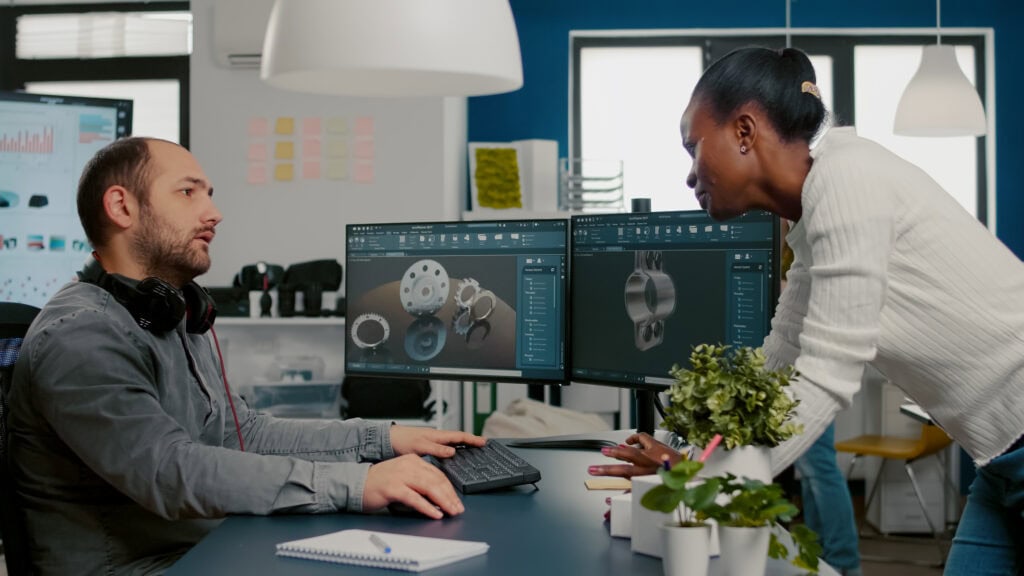
Successful reverse engineering depends on close collaboration between engineers, machinists, and technicians. An experienced engineering team understands how tolerances interact, how materials behave under load, and how manufacturing choices affect long-term performance.
This collaboration transforms reverse engineering from a reactive repair process into a proactive improvement system. Over time, facilities gain greater independence, resilience, and control over critical equipment.
If you want to explore more about how reverse engineering fits into long-term maintenance and reliability planning, our article “4 Benefits of Reverse Engineering Equipment for Different Industries” dives deeper into how facilities use this approach to protect uptime and more.
From Failure to Performance: How Schmidt Delivers Reverse Engineering That Lasts
At Schmidt Industrial Services, reverse engineering is integrated into a broader manufacturing and machining ecosystem. Through Wagner Machine, our precision machining division, Schmidt combines CNC machining, manual machining, engineering analysis, prototyping, and production support into a unified service model.
When customers bring in failed components, our engineering team performs a detailed analysis of physical dimensions, material condition, tolerance stack behavior, and system interaction. This information is converted into validated CAD files and technical drawings that support repeatable production.
Using advanced CNC milling and CNC turning centers, Wagner Machine produces custom parts, prototypes, and production components that meet tight tolerances and demanding surface finish requirements.
Our team works with a wide range of materials, including stainless steel, high-strength alloys, corrosion-resistant metals, and specialty sheet metal applications. This integrated approach ensures that reverse-engineered components are not only accurate but durable, compliant, and optimized for real-world operations.
Integrated Repair & Maintenance Support
Reverse engineering is most effective when it’s part of a broader maintenance strategy. Through our Repair & Maintenance capabilities, Schmidt Industrial Services restores, rebuilds, and reinforces critical equipment when OEM replacement is delayed, discontinued, or no longer cost-effective.
From failure analysis and component rebuilds to fabrication and protective upgrades, we deliver end-to-end support that reduces downtime and extends asset life. Partnering with Schmidt for both reverse engineering and ongoing repair & maintenance means you benefit from a unified solution, one that resolves immediate failures while building long-term operational resilience.
Choosing Control Over Dependency
The choice between OEM replacement and reverse engineering ultimately comes down to control. OEM sourcing offers familiarity but often at the expense of flexibility. Reverse engineering offers independence, adaptability, and the ability to improve rather than repeat past limitations.
With the right machining capabilities, engineering expertise, and validation processes, reverse engineering transforms equipment failures into opportunities for performance improvement.
For operations that value uptime, reliability, and long-term efficiency, that difference matters. Is that you? Contact us to learn more about what we can do for your operation.