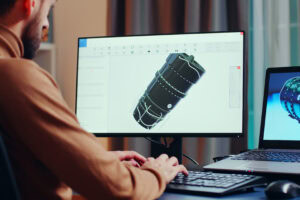
When a critical piece of equipment fails, the first instinct is usually simple: “Order the replacement part.” Until you find out the lead time is six months… Or the manufacturer no longer supports the machine… Or the replacement costs more than the entire line is worth. That’s the moment reverse engineering enters the conversation, not…

What Causes Corrosion and How to Fix It
Corrosion rarely announces itself until damage is already done. By the time leaks, thinning walls, or coating failures appear, the underlying cause has often been working quietly for years. The problem is that in industrial environments, corrosion is not just a cosmetic issue. It’s a reliability problem, a safety risk, and often a major cost…

Reverse Engineering vs Buying New from an OEM
When essential equipment fails, most operations default to the same solution: contact the original manufacturer and order a replacement part. On paper, that is the safest path: it matches the original design, meets documented specifications, and carries an official label. In reality, that decision often comes with long lead times, escalating costs, limited customization, and…

7 Signs Your Heat Exchanger Needs Repair
Every heating system has a heartbeat, and in most cases, it’s the heat exchanger. Whether it’s part of an industrial process line, an HVAC system, or a gas furnace, the heat exchanger quietly transfers heat where it’s needed most. But when it starts to fail, that “quiet” becomes costly. At Schmidt Industrial Services, we’ve spent…
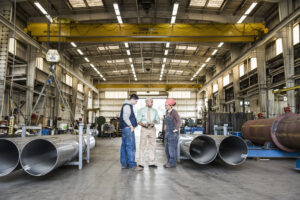
The Complete Guide to Industrial Metal Fabrication: Processes, Applications, and Industry Standards
You know metal fabrication plays a central role in modern manufacturing, but the moment you start looking into it, it can feel like a maze. Welding methods, ASME codes, material choices, and forming capabilities all matter, and one wrong decision can result in costly delays, compliance issues, or equipment that doesn’t perform as intended. We…