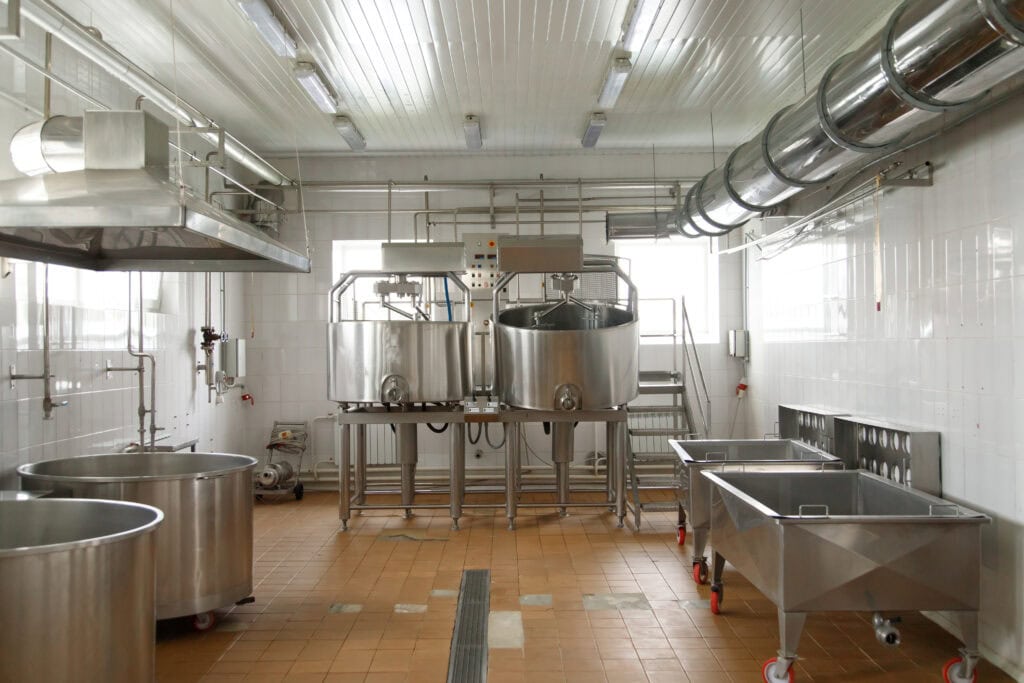
Every bite of food that leaves your facility carries your name and your reputation with it. Behind the scenes, there’s one unsung hero keeping that food safe, compliant, and ready for market…
The food-grade stainless steel that makes up your equipment.
Here’s the thing: not all stainless steel grades are created equal. Using the wrong metal can cause it to corrode faster, harbor bacteria, or fail inspections sooner than expected. The right grade of stainless steel can provide years of reliability, ease of cleaning, and peace of mind that your facility is built on a solid foundation.
At Schmidt Industrial Services, we’ve spent decades fabricating, repairing, and maintaining food industry equipment constructed from high-quality austenitic stainless steels, such as 304 and 316. We’ve seen what happens when plants choose the right materials… and when they don’t.
That’s why we put this guide together, so you can make informed decisions before small mistakes turn into large compliance or production problems.
1. What “Food Grade” Stainless Steel Really Means
When people hear the term food grade, they often think of cleanliness, but it’s about much more than that.
Food-grade stainless steel refers to metals with a specific chemical composition that resist corrosion, prevent contamination, and maintain structural integrity under constant exposure to moisture, acids, and temperature changes.
In many cases, austenitic stainless steels are used because they contain higher nickel and chromium content, which provides exceptional corrosion resistance and heat resistance. The combination of nickel, molybdenum, and chromium makes the alloy both durable and food safe, even in acidic or corrosive environments.
It’s not just about a shiny surface. It’s about the properties that keep your system hygienic and compliant with FDA regulations. If your equipment shows early signs of pitting corrosion or discoloration, the material itself may be the issue.
Our repair and maintenance team can inspect your systems and identify whether impurities, wrong metal grades, or poor finishing are costing you efficiency, safety, and compliance.
Is there a difference between “food grade” and “food safe” stainless steel?
Yes, there is a difference between “food grade” and “food safe” stainless steel. “Food grade” describes the type of stainless steel alloy (its chemical composition, finish, and durability), while “food safe” means the equipment made from that material won’t contaminate food under real operating conditions. Even if a material is ‘food grade,’ poor welding or finishing can still compromise its safety by creating seams or pits where bacteria can hide.”
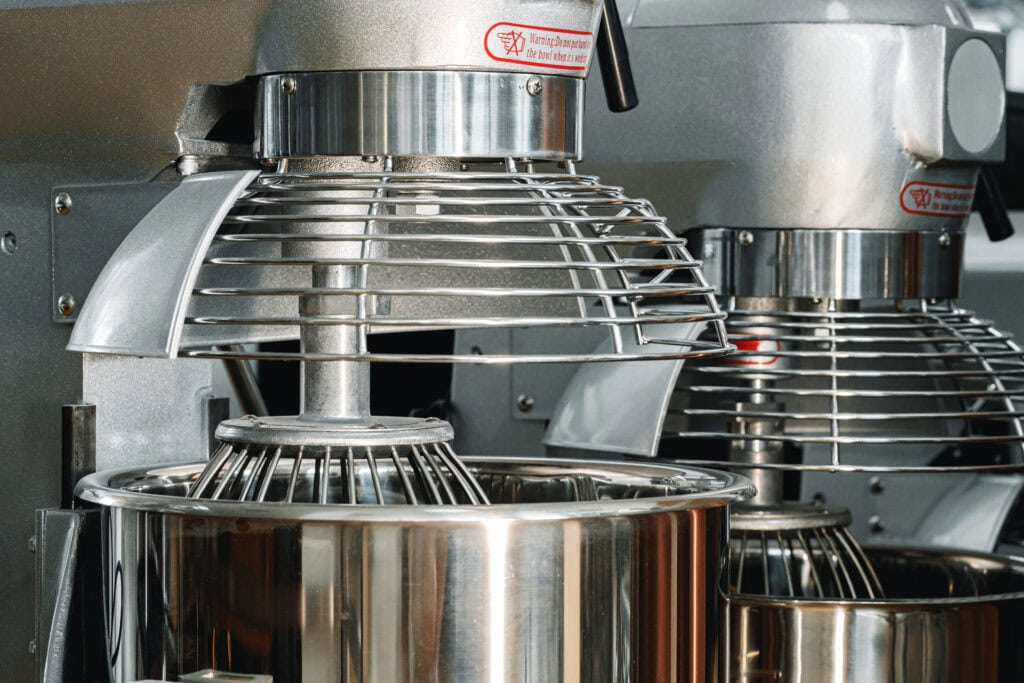
2. Not All Stainless Steel Grades Are Created Equal
The food industry commonly utilizes several grades of stainless steel, each specifically engineered for distinct environments and performance requirements. Among the most widely used are 304 and 316 (austenitic) and 430 (ferritic).
304 stainless steel is the workhorse of the food processing industry. Its balance of iron, nickel, and chromium gives it high resistance to oxidation and staining, making it suitable for a wide range of applications, from countertops to storage tanks. However, when exposed to salty or acidic foods, it can suffer pitting corrosion over time.
316 stainless steel, often referred to as marine grade, contains added molybdenum for enhanced corrosion resistance, particularly in harsh chemical or saline environments. That makes it a better choice for the dairy industry, seafood, and high-moisture areas where heat and cleaning chemicals are constant factors.
430 stainless steel has lower nickel and is non-magnetic, making it suitable for structural or non-contact areas where FDA food-contact standards don’t apply.
If you’re unsure which grade or alloy is best suited for your manufacturing process, consult with our fabrication experts. We’ll help you match the right stainless steel grades to your application and regulations.
Why is 316 stainless steel more expensive than 304, and is it really worth it?
The short answer: yes. 316 is worth the upfront investment when your environment demands it. 316 has more nickel and molybdenum, which makes it significantly more corrosion-resistant in the presence of acids or salt. In harsh food processing environments, that means fewer shutdowns and a longer lifespan. It’s an investment, not a luxury.
3. Corrosion Resistance, Durability, and Cleaning
Every plant manager knows that corrosion resistance is key to uptime and safety, but few realize how fast corrosion can spread in corrosive environments. It often starts as invisible pitting corrosion beneath residue or along welds. Over time, that minor surface imperfection becomes a costly failure.
Even austenitic steels, with their high chromium and nickel content, can fail prematurely if the manufacturing process isn’t precise. Improper passivation, trapped impurities, or rough welds can compromise hygiene. That’s why surface finish and post-fabrication treatments matter as much as metal selection.
Durability isn’t only about strength; it’s about maintaining smooth, sanitary surfaces that withstand temperature cycling, acids, and mechanical wear without losing resistance. When cleaning becomes difficult, bacteria have more places to hide, and that’s a red flag for FDA auditors.
If you’re already seeing early signs of wear, protective coatings can make all the difference. Explore our coatings division, ERS, to see how advanced linings and surface treatments prevent corrosion, extend equipment life, and keep your stainless steel performing like new.
No unnecessary downtime, no costly replacements.
What causes stainless steel to corrode if it’s supposed to be “stainless”?
Stainless steel corrodes because “stainless” doesn’t mean invincible. If the protective chromium oxide layer on the surface becomes damaged (due to harsh cleaning, poor passivation, or chemical buildup), the underlying steel can react with oxygen and moisture.
That’s when pitting corrosion starts to appear (and when Schmidt’s ERS division can restore and reinforce that protective barrier).
4. Choosing the Right Grade for Your Facility
Selecting the right food-grade stainless steel isn’t a one-size-fits-all approach. You must consider your food type, temperature range, chemical exposure, and the frequency of equipment cleaning. These factors determine which alloys and grades offer the best performance and high resistance to wear.
In many cases, austenitic stainless steels, such as 304 and 316, outperform other metals due to their balanced nickel and chromium ratios, which create a passive layer that protects against corrosion.
If your plant is scaling up, reviewing your supply chain, or adding new product lines, that’s the perfect time to assess your material choices. Collaborate with Schmidt’s Production Facility Asset Management team to design the next generation of food-safe equipment, tailored to the optimal chemical composition and heat resistance required for your specific processes.
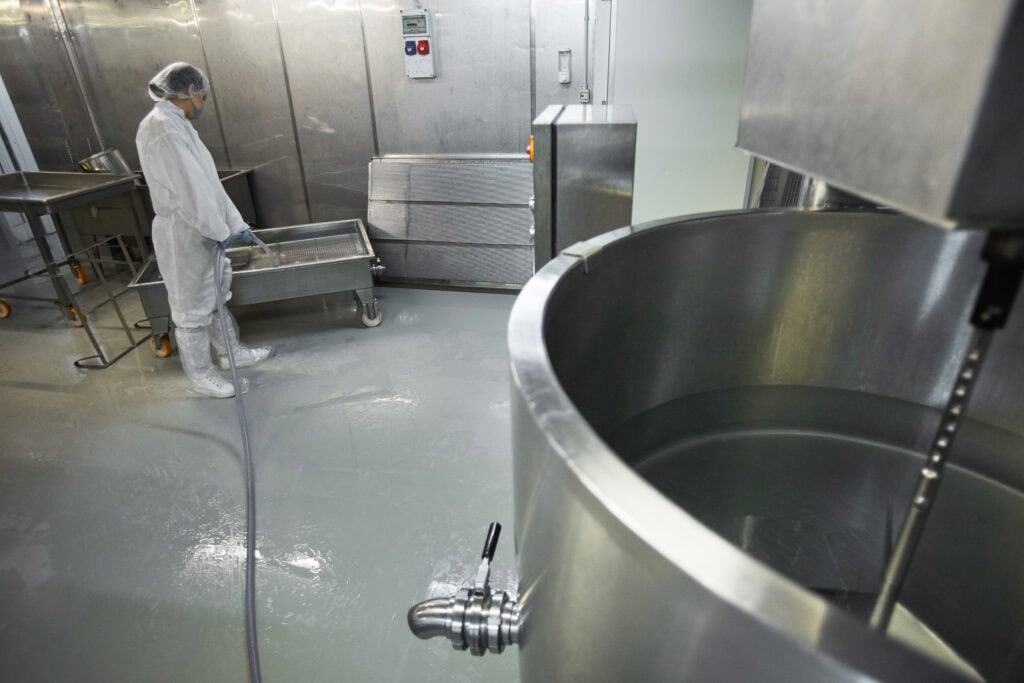
How do temperature and cleaning chemicals influence which grade I should choose?
Higher temperatures and stronger cleaners demand stainless steel grades with better heat resistance and corrosion resistance (typically 316 or 316L). If you use alkaline detergents, acids, or chlorides, upgrading material grades is the easiest way to prevent premature wear and contamination risk.
The Relationship Between Material and Reputation
There’s a reason leading manufacturers treat their stainless steel systems like part of their brand identity. The material choices you make silently communicate your standards to regulators, buyers, and the people who consume the food you produce. When your surfaces stay clean, your welds stay tight, and your tanks shine even after years of use, it says something powerful about how you do business.
We often remind clients: your equipment is your credibility in physical form…
If a supplier cuts corners, a weld fails, or corrosion appears where customers can see it, it’s not just a maintenance issue; it’s a reputation issue. The right food-grade stainless steel, applied and maintained with precision, reinforces everything your company stands for: safety, quality, and trust.
That’s why Schmidt takes every fabrication project personally. Every passivation, every coating, every inspection is part of a promise: that your brand’s integrity will never corrode under pressure.
How does Schmidt ensure long-term reliability once equipment leaves the shop?
We don’t stop at fabrication. Schmidt provides ongoing maintenance, coating support through ERS, and facility asset management. That means your food-grade stainless steel equipment will continue to perform the same way five years from now as it did on day one.
The Hidden Cost of Cutting Corners
In the food industry, every dollar saved on material selection has a way of showing up later…usually multiplied.
It starts small. Maybe a vendor promises you a lower price on a tank built with an “equivalent” alloy or a thinner stainless steel plate. It looks fine at first glance, passes inspection, and seems like a win.
However, the truth is that the chemical composition and nickel content of that cheaper steel often tell a different story. Without the right balance of chromium, molybdenum, and carbon, corrosion protection becomes less effective. Cleaning cycles get longer. Surfaces dull and start harboring residue. Soon, your maintenance team is working overtime just to keep up, and the “savings” disappear into repair bills, downtime, and frustrated auditors.
At Schmidt Industrial Services, we’ve seen this movie before. Plants that tried to save on materials end up replacing equipment years ahead of schedule. The lesson is simple: the cheapest metal isn’t the least expensive. Not when you factor in downtime, sanitation risks, and compliance pressure. Choosing quality stainless up front isn’t a luxury; it’s the foundation of reliability.
Final Word
Not all stainless steels are created equal, but the right partner can make sure yours is. Schmidt’s decades of experience in fabrication, coatings, and maintenance enable us to precisely balance nickel, chromium, and carbon content, delivering long-lasting, corrosion-resistant performance.
If you’re ready to strengthen your facility’s foundation, contact Schmidt Industrial Services today to future-proof your operation with proven food-grade stainless steel solutions.